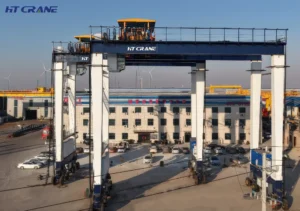
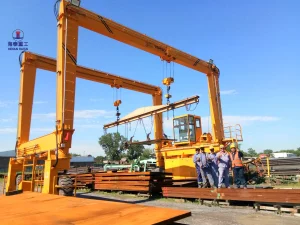
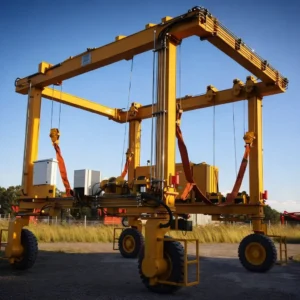
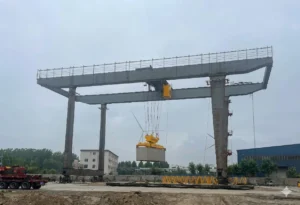
Portal cranes serve as essential lifting equipment in busy ports and shipyards worldwide. These versatile machines combine rail-mounted mobility with flexible boom movements to handle cargo efficiently. Haitai portal cranes stand out for their reliable performance in demanding marine environments. Procurement managers and port operators often face challenges in selecting the right model. This article provides clear guidance on key specifications and practical usage tips. Understanding these details helps make smarter investment choices for long-term success.
This guide explains Haitai portal crane features for modern ports and shipyards. From slewing and luffing mechanisms to heavy-lift performance, it helps procurement teams choose the right equipment, operate safely, and maintain reliability. Real-world insights for better decisions and smoother operations.
What Makes a رافعة بوابة Ideal for Port and Shipyard Operations?
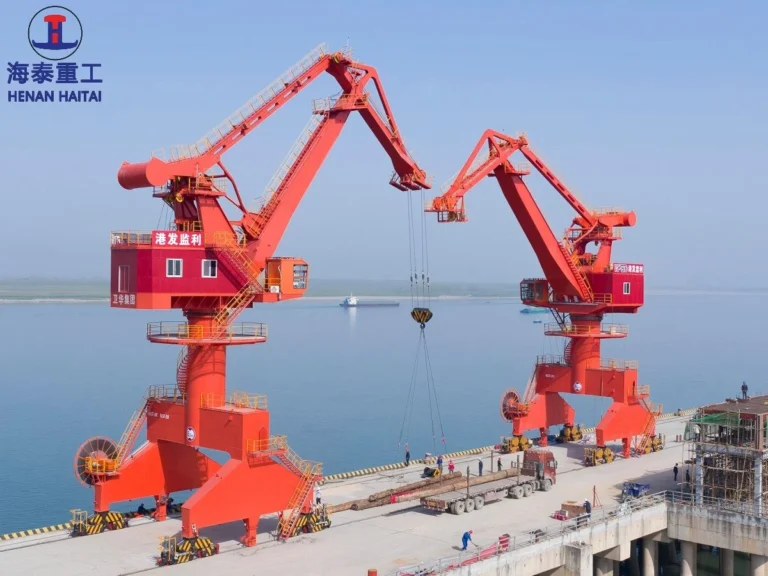
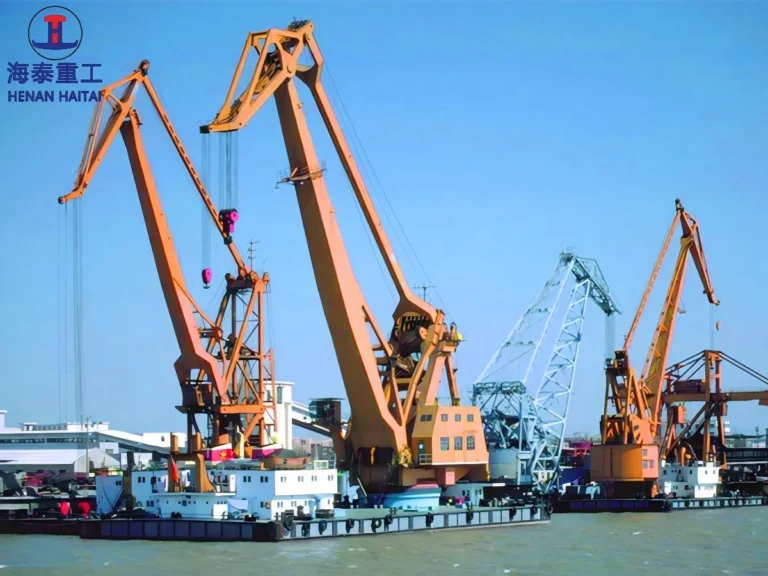
A haitai portal crane features a stable gantry base that travels on rails. This design allows vehicles to pass underneath while the upper structure rotates and adjusts reach. Haitai portal cranes typically offer lifting capacities from 10 to 80 tons. They suit various tasks including container handling, bulk cargo transfer, and shipbuilding assembly.

Their space-saving structure maximizes dock utilization. Operators benefit from smooth movements that improve safety and speed. Many overseas terminals choose portal cranes for their balance of power and flexibility. Proper selection starts with understanding site-specific needs. This foundation leads naturally into examining core technical features.
Core Technical Specifications of Haitai Portal Cranes
Haitai portal cranes deliver strong performance across key parameters. Common models provide working radii up to 45 meters and lifting heights between 10 and 45 meters. Working class ratings range from A5 to A7, supporting intensive daily operations in ports.
Slewing mechanisms enable controlled rotation, often reaching 0.2 to 0.8 revolutions per minute. Luffing systems allow precise boom angle adjustments while keeping loads level. These features reduce load sway and enhance positioning accuracy. Heavy-lift configurations handle demanding tasks with reinforced structures and safety systems.
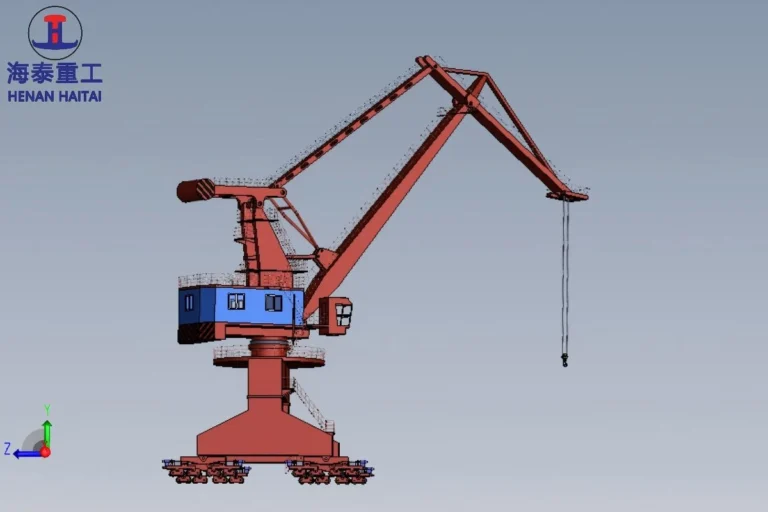
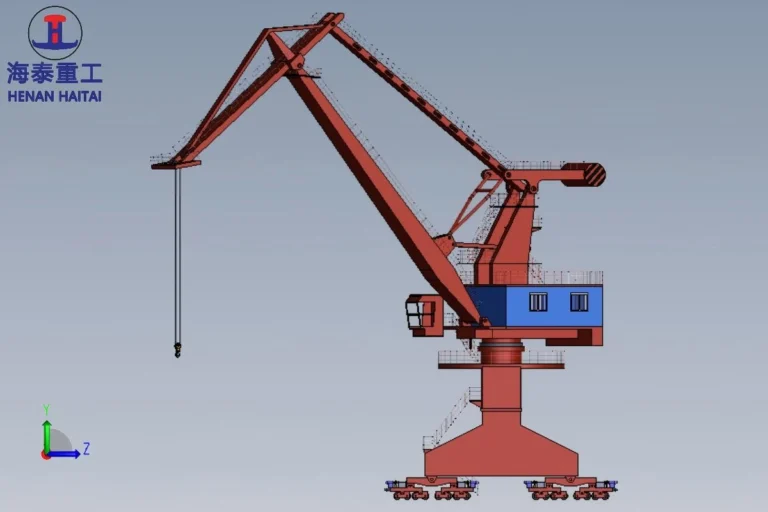
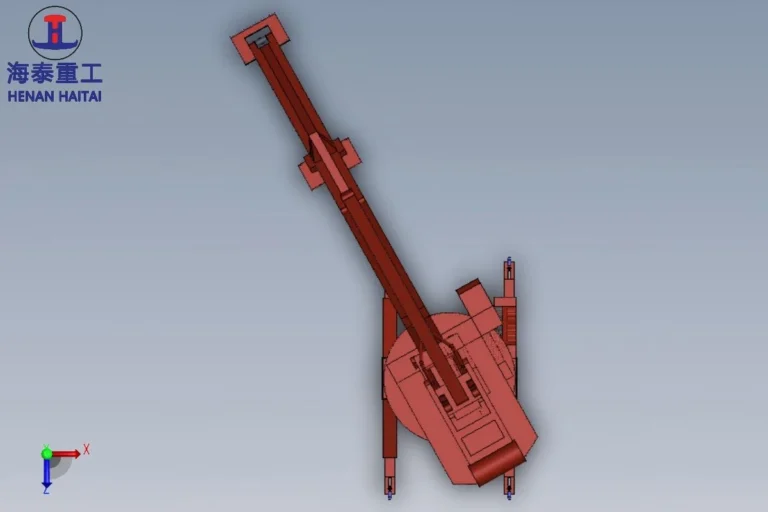
Reviewing these specifications helps match equipment to operational demands. Next, we explore how slewing contributes to overall efficiency.
| Parameters of Haitai Portal Crane | Standard Ranges |
|---|---|
| قدرة الرفع | 10-80 ton, custom available |
| نصف قطر العمل (الحد الأقصى) | 10 — 40 m |
| ارتفاع الرفع | 10 — 35 m |
| نطاق الدوران | 360 درجة متواصلة |
| سرعة الرفع | 10 - 40 م/دقيقة |
| سرعة الرفع | 10 - 30 م/دقيقة |
| سرعة الدوران | 0.5 - 2 دورة في الدقيقة |
| سرعة السفر (على السكة الحديدية) | 3 - 30 م/دقيقة |
| مزود الطاقة | تيار متردد 380 فولت / 50 هرتز (يتوفر جهد كهربائي مخصص) |
| فئة واجب العمل | A5 / A6 |
| شهادة | CCS · ABS · BV · DNV · RMRS |
| درجة حرارة التشغيل | -20 درجة مئوية — +45 درجة مئوية |
Portal Crane Slewing Mechanism: Enhancing Reach and Productivity
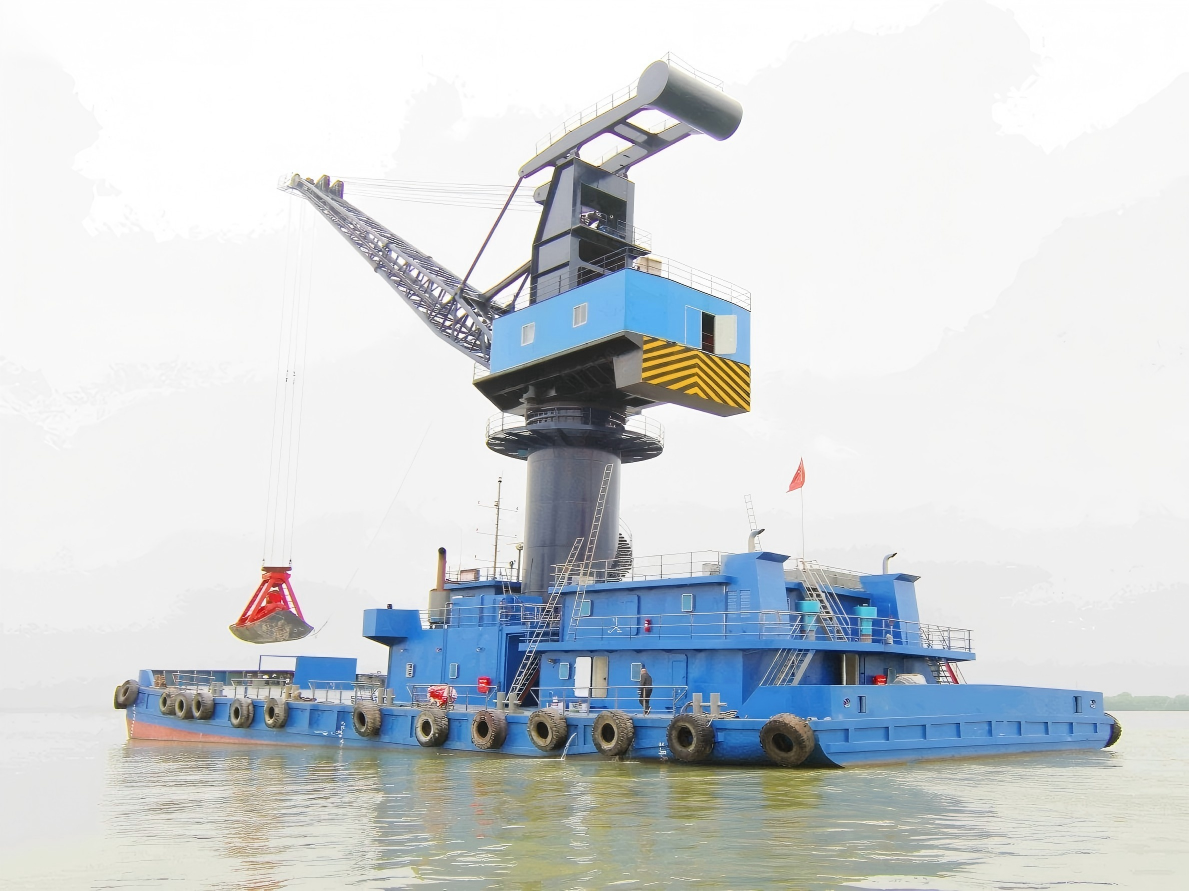
The slewing function allows the portal crane jib to rotate smoothly across a wide area. This capability proves especially valuable when vessels berth at different positions along the quay. Haitai designs use high-quality bearings and drives for stable, precise movement even under full load.
In busy ports, faster slewing speeds shorten cycle times and increase throughput. Operators appreciate the controlled rotation that minimizes repositioning of the entire crane base. This saves time and reduces wear on rail systems.
Proper slewing operation requires trained personnel and regular checks. These practices connect directly to the importance of effective luffing control.
Portal Crane Luffing System: Precision and Safe Load Handling
Luffing changes the boom angle to adjust outreach without moving the crane body. Haitai portal cranes often incorporate level-luffing technology that maintains constant load height during adjustments. This reduces risks and improves accuracy during ship loading or equipment installation.
Typical luffing speeds support efficient workflows while preventing excessive swinging. The system works well for both general cargo and sensitive heavy components in shipyards. Maintenance teams should focus on lubrication and hydraulic inspections to keep performance optimal.
Understanding luffing leads to better appreciation of heavy-lift capabilities in challenging conditions.
Heavy-Lift Performance and Built-in Safety Features of Portal Cranes
Heavy-lift operations demand robust equipment and strong safety measures. Haitai portal cranes feature reinforced booms and advanced overload protection systems. These ensure stable handling of maximum rated loads across the full working radius.
Emergency brakes, anti-collision devices, and limit switches add layers of protection for operators and cargo. In shipyards, these features support precise assembly of large ship sections. Port terminals benefit from reliable performance during peak seasons.
Selecting models with appropriate safety certifications protects your investment. This brings us to practical advice for choosing the right portal crane.
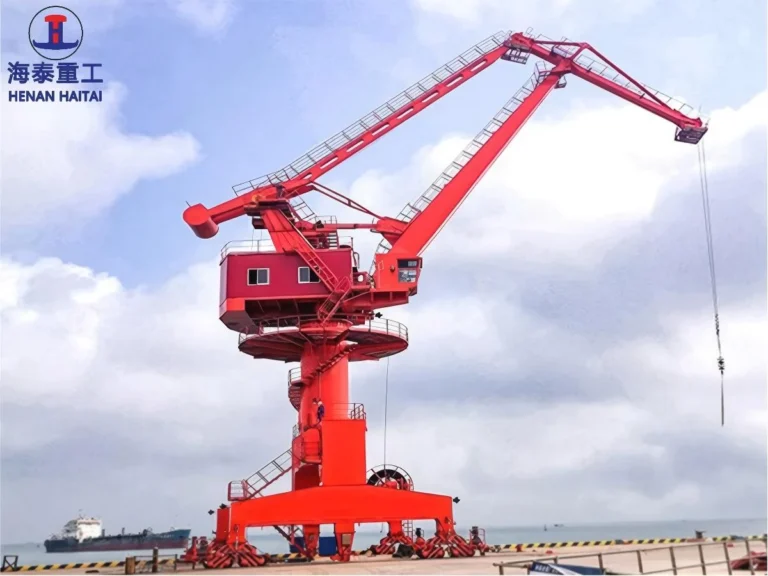
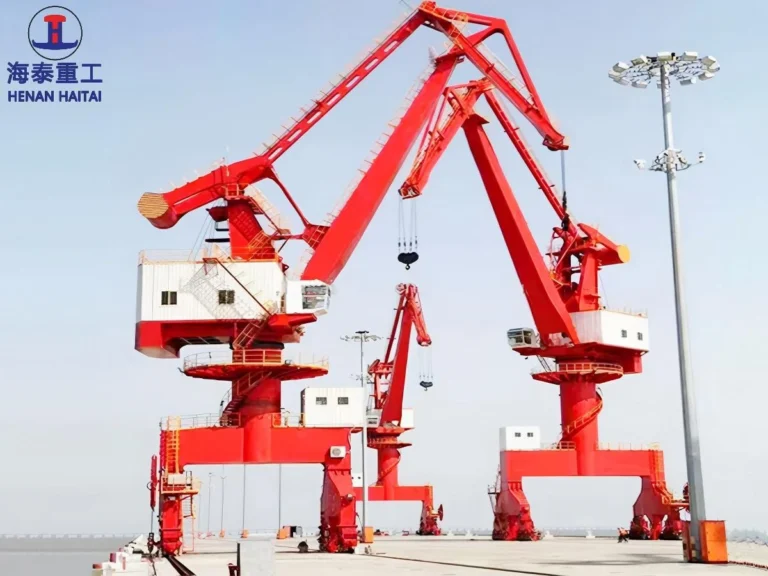
رافعة بوابة للبيع
How to Select the Right Haitai Portal Crane for Your Facility?
Start by assessing your average load weights, vessel sizes, and daily throughput requirements. Consider available rail length and clearance height at your site. Haitai offers customization options to match local climate conditions and power supply standards.
Budget planning should include not just purchase price but also long-term operating and maintenance costs. Request detailed technical proposals and site visits when possible. Compare cycle times and energy efficiency between models.
Working with experienced manufacturers simplifies compliance with international port standards. Once selected, proper operation and maintenance ensure maximum return on investment.
Daily Operation Best Practices for Haitai Portal Crane Users
Trained operators play a critical role in safe and efficient portal crane use. Always conduct pre-shift inspections of cables, brakes, and limit switches. Follow manufacturer load charts strictly and avoid side pulling or sudden movements.
Coordinate well with ground teams using clear hand signals or radio communication. Monitor wind speeds and stop operations when conditions exceed safe limits. Regular practice with slewing and luffing improves operator confidence and productivity.
Good operational habits reduce downtime and extend equipment life. This naturally leads into structured maintenance routines.
Essential Haitai Portal Crane Maintenance Guidelines for Long-Term Reliability
Preventive maintenance keeps portal cranes running smoothly year after year. Schedule weekly visual checks and monthly lubrication of moving parts. Pay special attention to wire ropes, slewing bearings, and hydraulic systems.
Haitai provides comprehensive manuals and spare parts support for exported equipment. Train your team on basic troubleshooting to resolve minor issues quickly. Keep detailed maintenance records to track wear patterns and plan replacements proactively.
Consistent care minimizes unexpected breakdowns and supports safe operations. These practices contribute to lower overall ownership costs.
Conclusion: Making Informed Decisions for Your Port or Shipyard
Haitai portal cranes combine practical specifications with reliable performance for ports and shipyards. Their slewing, luffing, and heavy-lift capabilities address real operational challenges effectively. Focus on matching equipment to your specific needs and commit to proper training and maintenance.
Take time to evaluate your current and future requirements carefully. Contact professional suppliers for tailored recommendations and competitive solutions. Visit https://www.cranehaitai.com to explore models and request detailed quotations. Smart choices today create efficient, safe, and profitable operations tomorrow.

الأسئلة الشائعة
What are the typical technical parameters of a reliable portal crane?
Haitai portal cranes usually offer 10-80 ton lifting capacity, 15-45 meter working radius, and A5-A7 working class ratings. These parameters support most port cargo handling and shipyard assembly needs. Always verify exact specifications against your expected loads and duty cycles. Professional consultation helps ensure the chosen model delivers optimal performance without over-specification.
How do I choose the best portal crane for my port terminal?
Evaluate cargo types, vessel frequency, and site layout first. Consider rail system compatibility and power availability. Haitai portal cranes provide flexible configurations for different terminal scales. Request performance data and reference projects from similar environments. Factor in maintenance support and spare parts availability for long-term success.
What differences exist between port and shipyard portal crane applications?
Port operations emphasize fast cargo transfer with frequent slewing and traveling. Shipyard use often requires higher precision and heavier individual lifts during assembly. Haitai designs adapt to both scenarios through customized boom lengths and control systems. Understanding your primary workflow helps select appropriate safety features and duty ratings.
What daily maintenance is critical for portal crane longevity?
Focus on lubrication, rope inspections, and brake testing during routine checks. Clean dust and salt accumulation regularly in coastal areas. Follow manufacturer schedules for hydraulic fluid changes and electrical system tests. Haitai offers guidance and parts to support proactive care. Consistent maintenance prevents costly downtime.
How do procurement costs compare with long-term value of quality portal cranes?
Initial investment in a well-built Haitai portal crane may appear higher but delivers better reliability and efficiency. Factor in energy consumption, maintenance needs, and service life. Cheaper options often lead to frequent repairs and lower productivity. Calculate total cost of ownership for realistic comparisons. Professional suppliers provide transparent pricing and support.