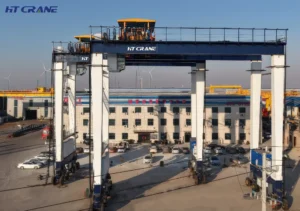
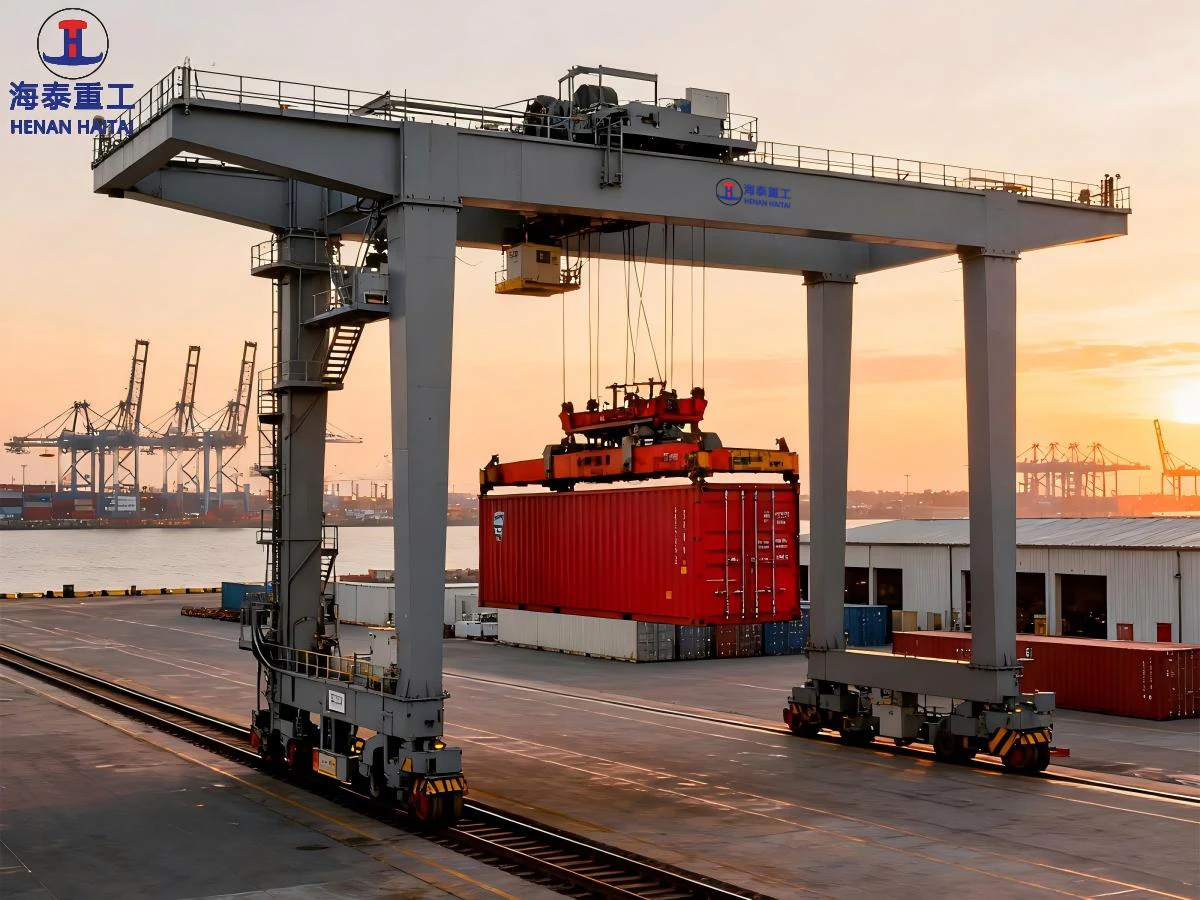
RTG crane is a core quipment of modern container terminal operations. It can handle containers or loads from 20 to 65 tons and moves flexibly for high-throughput container yard environments.
This 2026 RTG crane guide covers RTG crane defeinition, types, structural components, key specifications, port application scenarios, selection criteria, and maintenance essentials. Whether you’re evaluating suppliers or specifying a new fleet, this is your single reference.
1. RTG Crane Guide: Definition and Core Function
RTG Crane Guide: What Is RTG Crane?
An RTG crane, short for Rubber Tired Gantry Crane, is a mobile, rubber-wheeled overhead gantry crane designed specifically for stacking and moving containers in port and intermodal terminal environments. Unlike rail-mounted gantry (RMG) cranes, RTG cranes travel on rubber tires, giving operators the flexibility to relocate equipment between yard blocks without fixed track infrastructure.

The crane straddles a row of container stacks, lifts containers via a spreader bar suspended from an overhead trolley, and places them with precision onto trucks, railcars, or adjacent container stacks. Most modern RTG cranes are electrically driven — either via onboard diesel-electric generators or direct shore power connection (E-RTG) — and are controlled from an elevated operator cabin or, increasingly, via remote automation systems.
RTG Crane vs RMG Crane: Key Differences
RTG Crane has different enginnering design compared with RMG crane. Details are in the table. If you want to learn more differences, please click this link to the comprehensive RTG VS RMG crane comparison article.
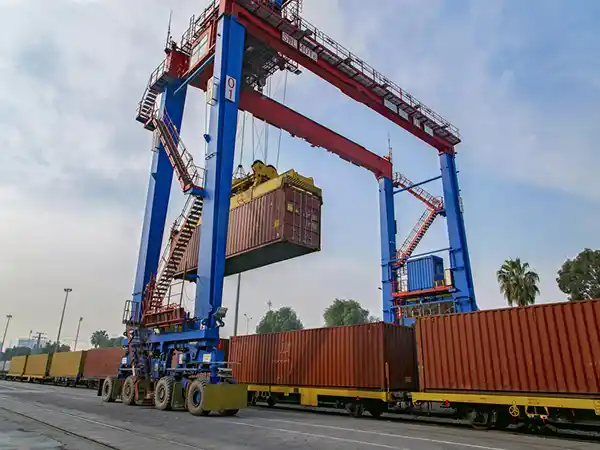
| عامل | رافعة RTG | رافعة RMG |
| التنقل | Freely mobile across yard | Fixed to rail tracks |
| Infrastructure Cost | Lower (no rail installation) | Higher (rail civil works required) |
| Flexibility | High — relocatable between blocks | Low — fixed to designated lanes |
| ارتفاع التكديس | حتى 1 من 6 | Up to 1 over 7+ |
| التطبيق النموذجي | Mid-to-large container terminals | High-density automated terminals |
| Electrification | Diesel-electric or E-RTG | Fully electric (rail-powered) |
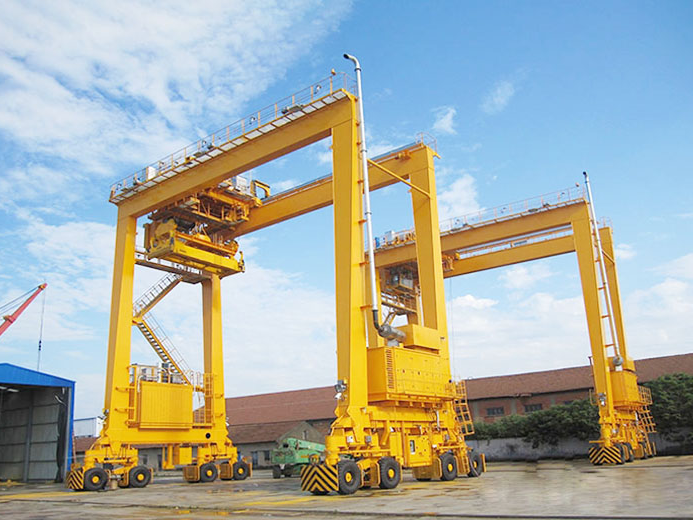
RTG Container Gantry Crane
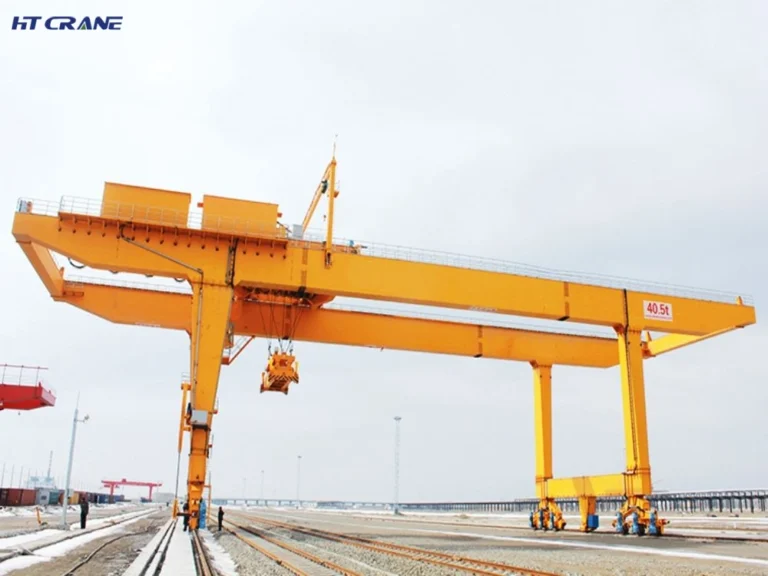
رافعة جسرية للحاويات من شركة RMG
2. RTG Crane Guide: Types and Classification
Understanding RTG crane types is the first step in any equipment specification process. Haitai RTG cranes are classified by single or double girder configuration, electric or diesel or hydrid drive system, and different automation level.
RTG Crane Guide: Single Girder RTG Crane Vs. Double Girder RTG Crane
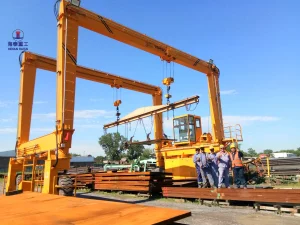
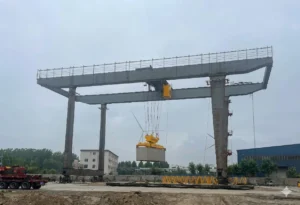
The girder — the main horizontal bridge beam — defines the crane’s structural capacity and span. Single girder RTG cranes use one main beam and are suited to lighter-duty, narrower-span applications (typically up to 40t capacity and 4–5 container rows). Double girder RTG cranes use two parallel beams, enabling spans of 23–35 meters, lifting capacities up to 65 tons (twin-lift), and A6–A8 duty classification for high-throughput port container handling.
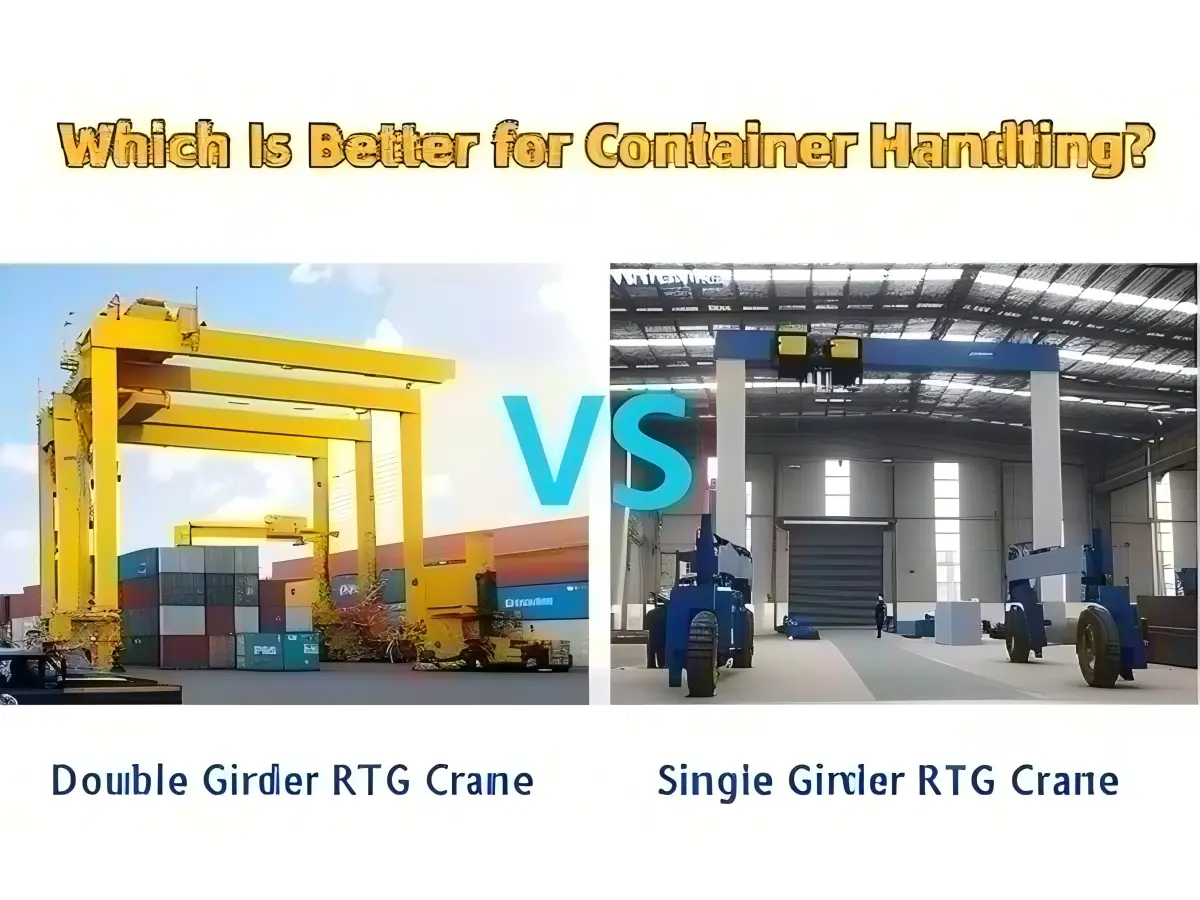
For most commercial container terminal deployments, double girder RTG is the standard configuration.
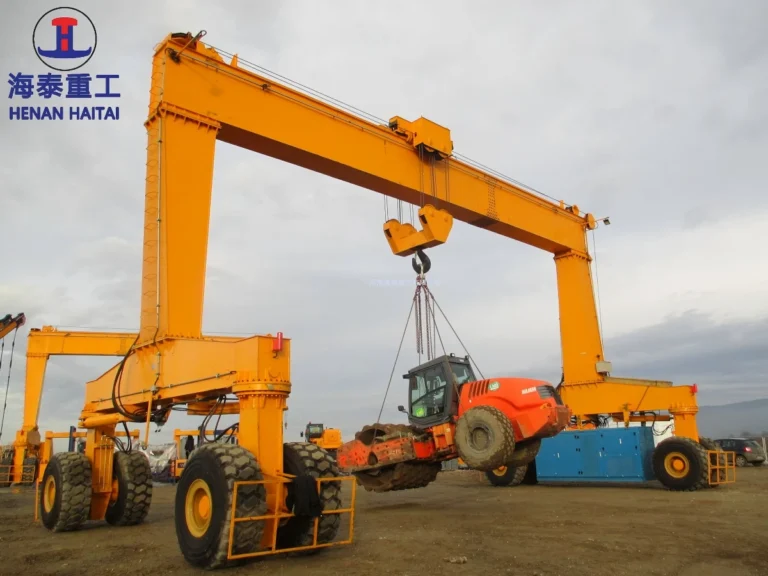
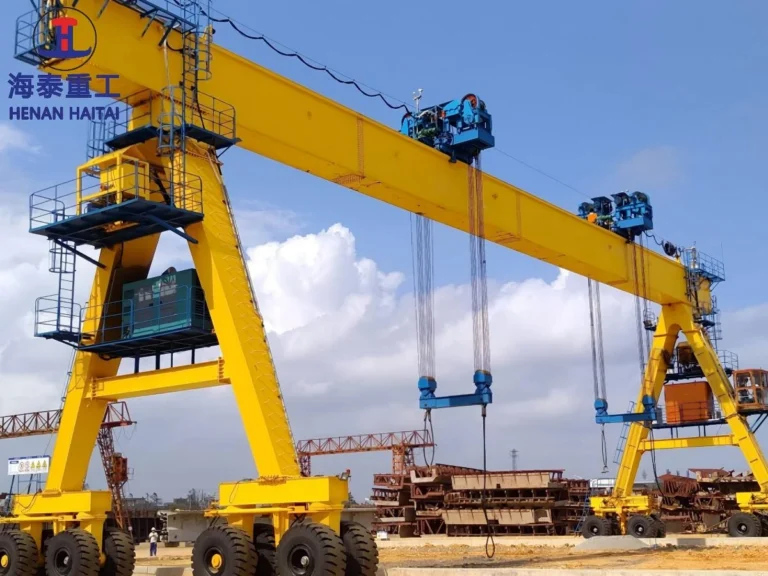
Single Girder RTG Crane
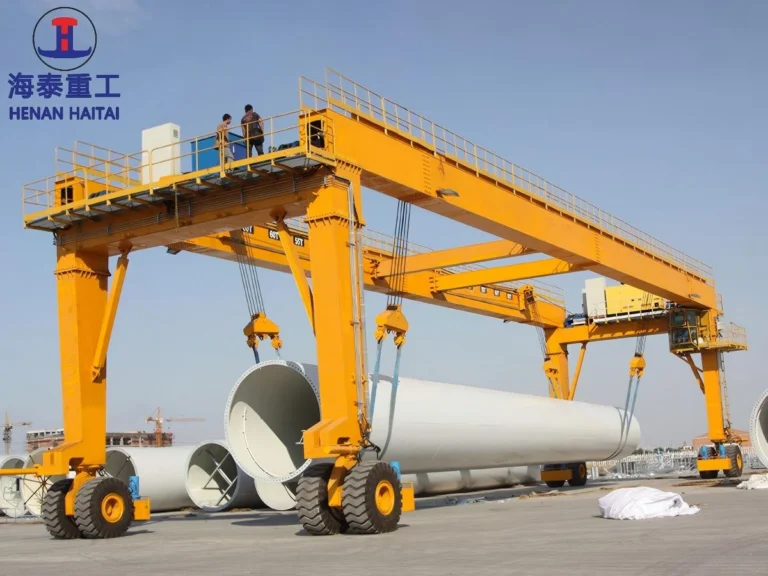
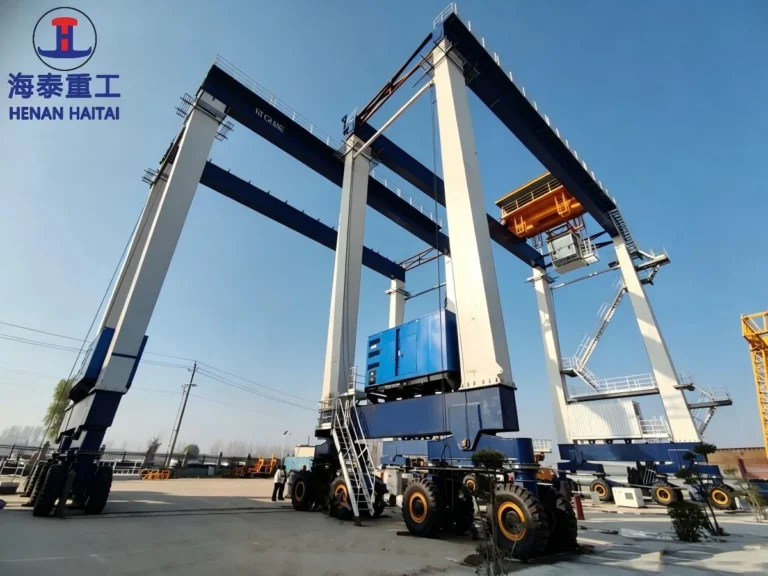
Double Girder RTG Crane
Diesel RTG, Electric RTG, and Hybrid RTG Crane Drive System Classification
| Drive Type | وصف | طلب |
|---|---|---|
| Diesel-Electric RTG | Onboard diesel generator powers electric drives | Terminals without reliable grid access |
| رافعة نقل الطاقة الكهربائية (E-RTG) | Shore power via cable reel or conductor rail | New terminal projects; electrification mandates |
| مولد حراري هجين | Diesel + energy storage (supercapacitor / battery) | Terminals transitioning to electrification |
Manual RTG, SA-RTG, A-RTG – Diffrent RTG Crane Automation Level
- Manual RTG: Full operator control from cabin
- Semi-automated RTG (SARTG): Automated landing and stacking; operator manages travel and positioning
- Fully automated RTG (ARTG): Machine vision, RFID, and PLC systems manage all operations — operator supervises remotely
3. RTG Crane Guide: Components and Structure
A complete understanding of RTG crane structure helps procurement teams evaluate supplier proposals and identify specification gaps. Main Structural Components include:
- Gantry Frame: The primary steel structure consisting of two vertical legs connected by the overhead girder(s). Fabricated from structural steel to EN 10025 S355 or equivalent GB/T 1591 Q345B. The frame must accommodate full rated load plus dynamic factors defined in FEM 1.001 and ISO 4301-1.
- Bridge Girder(s): One (single) or two (double) horizontal beams spanning the container rows. Deflection under full load must meet L/700 for standard operations and L/1000 for precision applications per FEM design standards.
- Trolley and Hoisting Mechanism: The trolley travels laterally along the girder and carries the hoist drum, wire rope reeving system, and spreader connection. Wire rope hoist systems are standard; brake holding torque must meet 150–175% of rated load torque per FEM standards.
- Spreader Bar: The telescopic below-hook device that locks onto ISO container corner castings. Twin-20 spreaders allow simultaneous lift of two 20-foot containers. Spreader weight (typically 4–6 tons) must be accounted for in net lifting capacity.
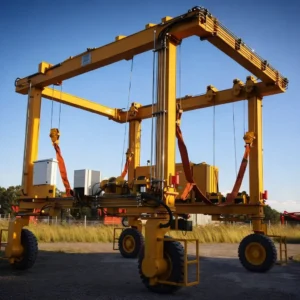
- Rubber Tire Bogies: Each corner of the gantry frame rests on a multi-wheel bogie. Tire count (typically 8–16 wheels per corner) and load-per-axle rating determine yard surface requirements. Most RTG cranes support straight travel, crab-steer (45°), or fully sideways movement.
- Electrical and Control System: Includes main drive panels, PLC control architecture, VFD motor drives for all motion axes, anti-collision sensors, load moment indicators, and data communication interfaces for automated operations.
4. RTG Crane Guide: Key Technical Parameters
RTG crane specifications must be matched to your terminal’s operational requirements before issuing an enquiry to RTG crane manufacturers or suppliers.
RTG Crane Specifications Table
Here is single girder RTG crane and double girder RTG crane specifications
| المعلمة | رافعة جسرية أحادية العارضة | رافعة جسرية مزدوجة العوارض | ملحوظات |
|---|---|---|---|
| قدرة الرفع (SWL) | 20t – 40t | 35t – 65t | Twin-lift adds ~10–15t spreader weight |
| فترة | 15m – 23m | 23m – 35m | Determined by yard layout |
| ارتفاع الرفع | Up to 1 over 4 | حتى 1 من 6 | Stack density target drives this |
| سرعة الرفع | 20-40 متر/دقيقة | 20–50 m/min | Variable speed via VFD standard |
| سرعة سير العربة | 40–70 m/min | 50–90 m/min | Higher speed = better cycle time |
| سرعة حركة الجسر | 30–90 m/min | 30–90 m/min | Diesel-electric typically lower end |
| مزود الطاقة | 380–415V / 50Hz | 380–415V / 50Hz | Custom voltage available |
| فئة الخدمة | A5–A6 | A6–A8 | Per ISO 4301-1:2016 |
Values represent standard production range; project-specific parameters vary.
Span Calculation for Standard Layouts
RTG crane span is derived from your yard layout — not selected arbitrarily. For a 6-wide container stacking pattern with central truck lane, the standard span is 23.47 meters, based on ISO 668 container width of 2.438m, standard row spacing, and a 5-meter truck lane. This is the most common span specification for double girder RTG cranes in commercial container terminals worldwide.
5. RTG Crane Guide: Where RTG Cranes Are Applied?
Port Container Terminals: The primary RTG crane application. Port terminals handling 200,000 TEU or more annually rely on RTG crane fleets to manage container yard operations between vessel discharge and truck/rail gate. Terminal operators including DP World, PSA International, and Hutchison Ports operate large RTG fleets — predominantly double girder, E-RTG configuration in new deployments.
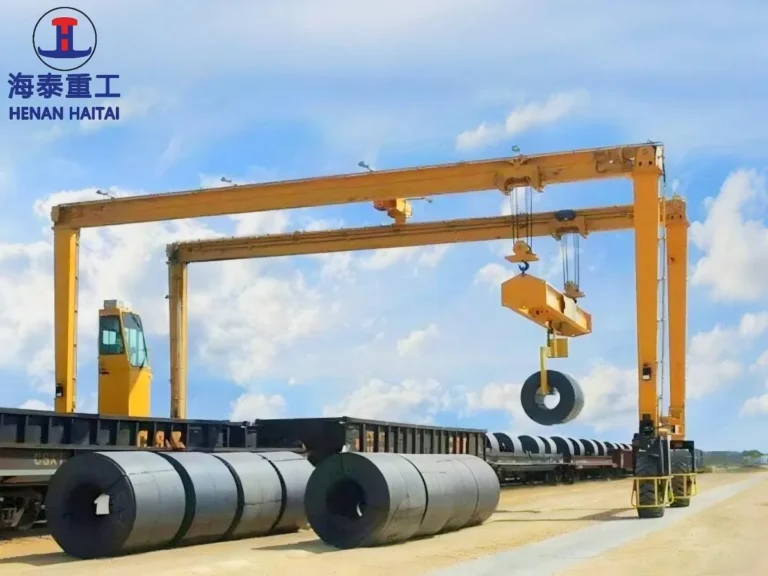
Intermodal Rail Terminals: RTG cranes at inland rail terminals handle container transfers between rail flatcars and road trucks. Span requirements are often narrower (covering 2–4 rail tracks), and throughput is lower than port terminals — making single girder RTG cranes or purpose-designed intermodal equipment appropriate in some cases.
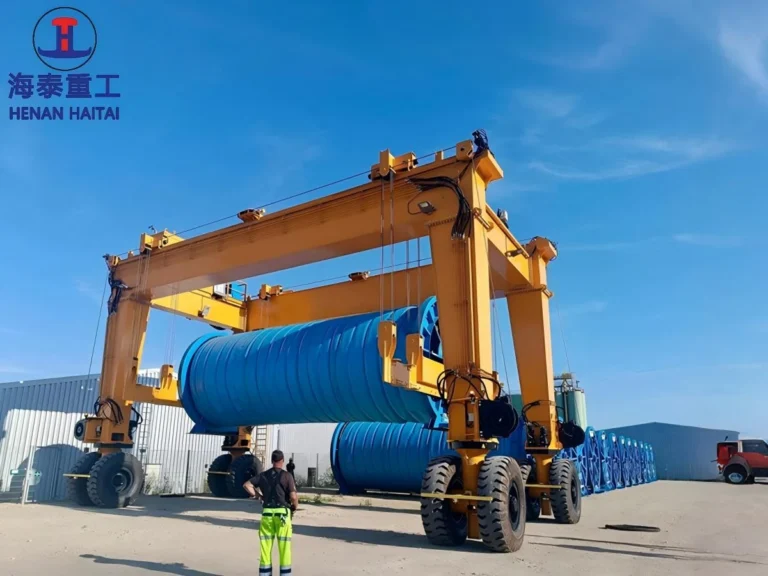
Container Freight Stations and Dry Ports: Inland container depots (ICDs) and dry ports use RTG cranes for customs examination, container consolidation, and storage. These facilities typically handle lower volumes with more varied cargo types, and often specify single girder RTG cranes or mobile gantry crane alternatives where standard container stack heights are not required.
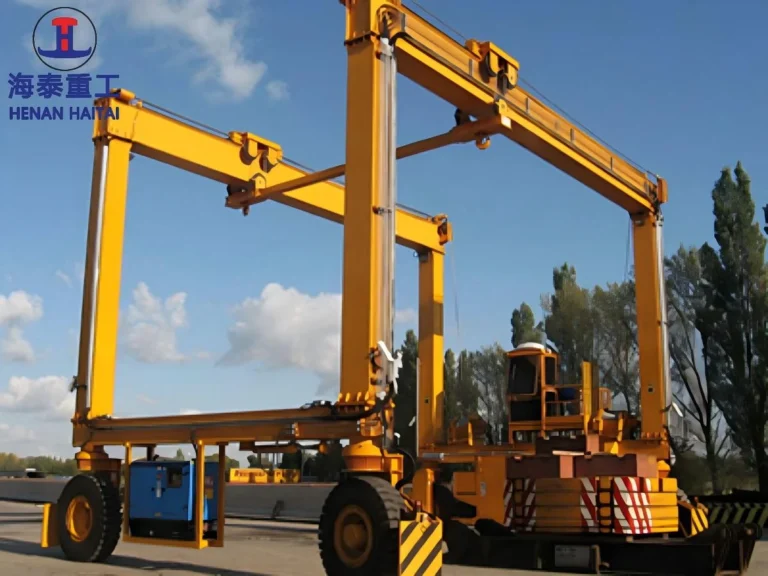
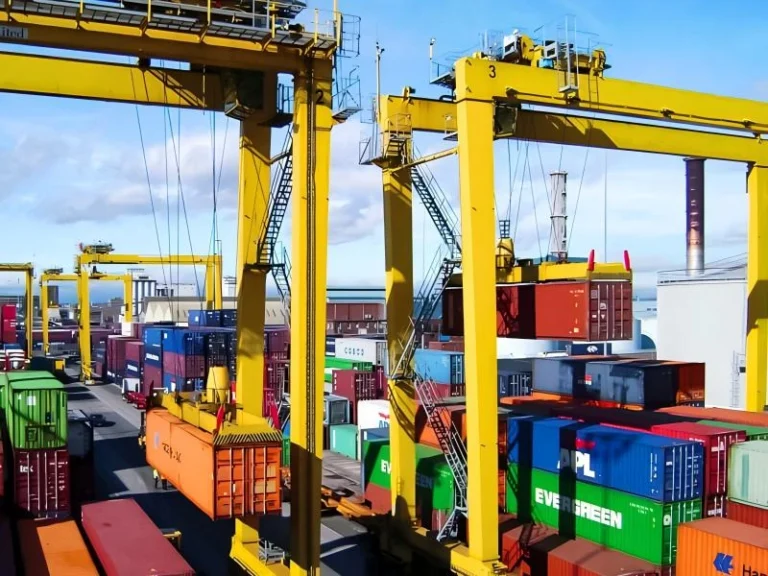
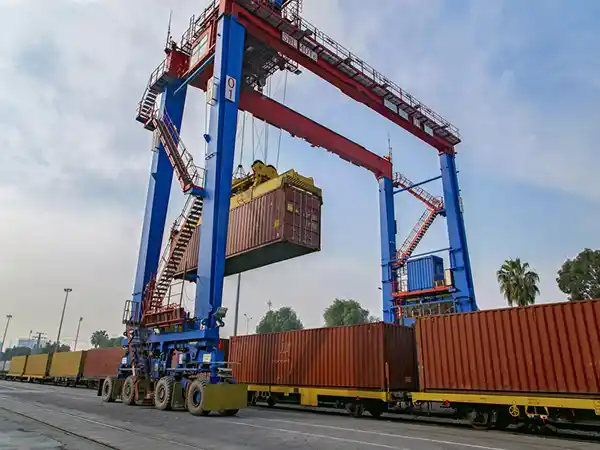
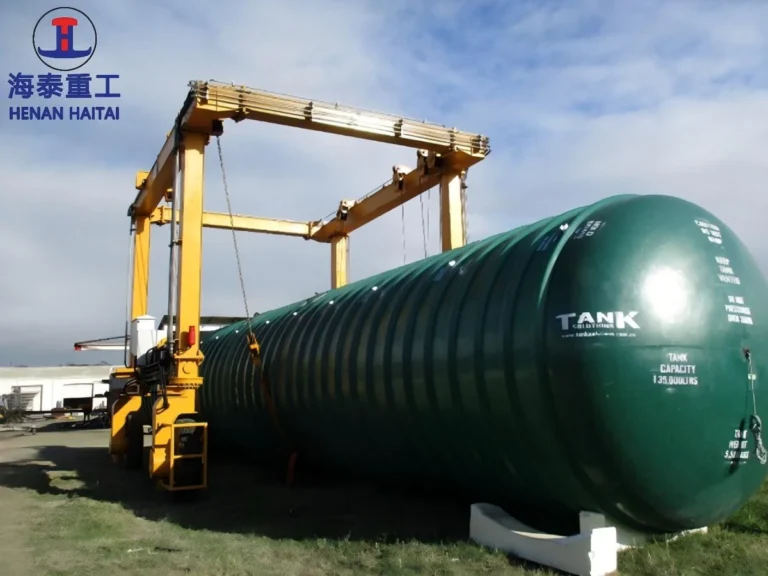
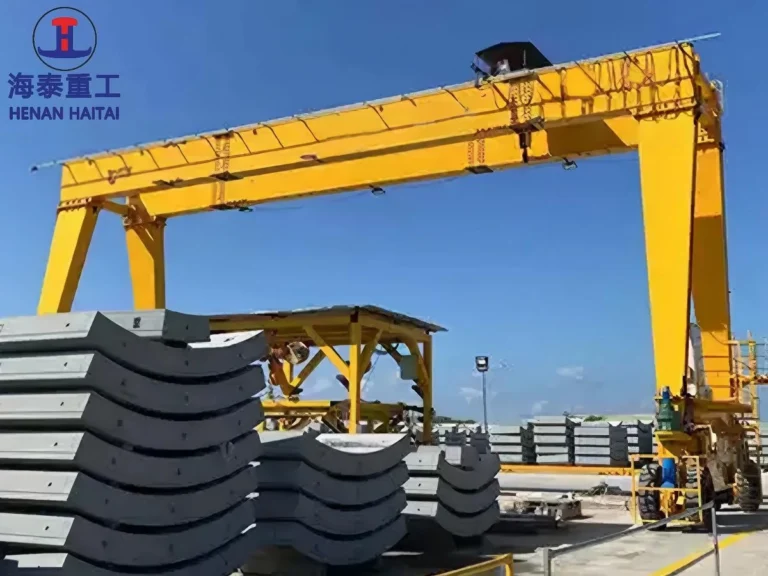
6. RTG Crane Guide: Why Terminals Choose RTG Crane?
- Higher stacking density than reach stackers: RTG cranes stack 4–6 high versus 3–4 high for reach stackers, reducing required yard footprint by 20–35% for equivalent storage capacity
- Lower infrastructure cost than RMG: no rail civil works required — RTG cranes can be commissioned on standard reinforced yard pavement
- Flexible yard management: RTG cranes can be redeployed between yard blocks as volume shifts, unlike RMG cranes which are permanently track-bound
- Scalable fleet: terminals can add RTG units incrementally as throughput grows, without major infrastructure investment
- Electrification pathway: E-RTG and hybrid configurations allow progressive decarbonization of yard operations without replacing the crane fleet
7. How to Choose an RTG Crane: Selection RTG Crane Guide
A structured RTG crane selection process works through these decision points in sequence.
Step 1 — Define Throughput and Duty Requirements
Design throughput in TEU per crane per year determines minimum duty class. Broadly: under 150,000 TEU/crane/year = A5–A6; above 200,000 TEU = A6–A7; continuous high-volume operation = A7–A8. Never underspecify duty class to reduce bid cost — it is the single most common source of premature structural fatigue in port crane fleets.
Step 2 — Determine Span and Stacking Height
Span follows directly from your yard layout: count the container rows your crane must cover, add the truck lane width, and derive the required span from ISO container dimensions. Stacking height is determined by your target ground slot utilization — higher stacks mean smaller footprint but greater hoist height and structural requirements.
Step 3 — Select Drive System
For new terminal projects in regulated markets (EU, increasingly Asia): specify E-RTG. For terminals in locations with unreliable grid supply, or where electrification is not yet on the regulatory roadmap: diesel-electric remains practical. Hybrid options offer a transitional path with lower upfront infrastructure commitment.
Step 4 — Evaluate RTG Crane Manufacturers and Suppliers
- Verifiable reference installations at comparable terminals (capacity, duty class, application type)
- CE marking, ISO 9001:2015, load test documentation as standard contract deliverables
- Regional service network and spare parts availability — confirm lead times for high-wear items
- Training and commissioning support included as contractual scope
- 10-year spare parts availability commitment in writing
Major RTG crane manufacturers include ZPMC (China), Konecranes (Finland), Liebherr (Germany/Ireland), and Kalmar (Finland). Each offers standard and customized configurations across the full capacity and automation range.
8. RTG Crane Guide: Maintenance to Protect Fleet Availability
High-throughput container terminals target 95%+ mechanical availability for their RTG fleets. Achieving this requires structured preventive maintenance programs, not reactive repair.
| نوع الفحص | تكرار | العناصر الرئيسية |
|---|---|---|
| Pre-Shift Check | يوميًا | Tire pressure, brake function, spreader twist locks, limit switches |
| Routine Service | أسبوعي | Lubrication (trolley rail, wire rope, bogie bearings), visual structural check |
| Intermediate Inspection | شهريا | Wire rope condition, drum and sheave wear, hoist brake lining thickness |
| Major Inspection | سنويا | Full structural NDT (weld inspection), electrical certification, load test |
| Wire Rope Replacement | Per condition / 12–24 months | High-cycle cranes may require annual replacement |
RTG crane safety requirements in most jurisdictions mandate annual third-party inspection and load testing as a condition of operating certification. Build this into your maintenance budget from the outset — it is not optional.
Summary of RTG Crane Guide 2026
The RTG crane is the defining piece of equipment in modern container terminal operations. Getting the specification right — girder configuration, capacity, span, duty class, drive system — determines your terminal’s throughput capability and total cost of ownership for the next 15–25 years.
القرارات الرئيسية بالتسلسل: confirm throughput and duty class first; derive span from your yard layout; specify double girder for any commercial container terminal application above 150,000 TEU/crane/year; plan your electrification pathway; and qualify suppliers on reference installations and long-term service capability — not just unit price.
This RTG crane guide provides the framework. The specific parameters depend on your terminal’s design — engage your equipment supplier and terminal planner together before locking the specification.

المعايير والمراجع ذات الصلة
- ISO 4301-1:2016 – الرافعات: التصنيف، عام
- FEM 1.001 – قواعد تصميم أجهزة الرفع (الطبعة السادسة)
- EN 13135:2013 – سلامة الرافعات: متطلبات تصميم المعدات
- UNCTAD Port Equipment Electrification Report, 2023
- ICHCA International Container Terminal Planning Guidelines
- توجيه الآلات 2006/42/EC (الاتحاد الأوروبي)
Frequently Asked Questions of RTG Crane Guide 2026
س1: ما الفرق بين رافعة RTG ورافعة RMG؟
Both are gantry cranes used for container stacking, but the key difference is mobility. RTG cranes travel on rubber tires and can be repositioned across the yard without fixed infrastructure. RMG cranes run on fixed rails and are typically used in high-density automated terminals where land cost is high and throughput is very consistent. RTG cranes have lower infrastructure costs and greater operational flexibility; RMG cranes offer higher stacking density and are better suited to full automation. Most commercial terminals globally use RTG cranes.
Q2: How does an RTG crane work in a container terminal?
An RTG crane straddles a row of container stacks and travels along the length of the yard block on rubber tires. The operator (or automated control system) positions the crane over a target container, lowers the spreader bar to lock onto the container’s ISO corner castings, lifts the container, travels to the delivery point, and lowers it onto a truck, rail car, or adjacent stack. The entire cycle — pick, travel, land — typically takes 90–120 seconds for a skilled operator. Modern semi-automated RTG systems automate the landing and stacking phases, reducing cycle time variability.
Q3: What are the standard RTG crane safety requirements for port operations?
RTG crane safety requirements vary by jurisdiction but typically include: annual third-party structural and load test certification; daily pre-shift operator inspection; overload protection (electronic load limiter at 110% rated capacity); anti-collision systems; end-of-travel limit switches on all motion axes; redundant braking on the hoist; and operator cabin ergonomics meeting applicable national standards. In EU ports, cranes must comply with Machinery Directive 2006/42/EC. In the U.S., OSHA 29 CFR 1910.179 applies. Request compliance documentation from any RTG crane supplier as a standard contract deliverable.
Q4: How long does an RTG crane last, and what affects service life?
A well-maintained RTG crane operating at its specified duty class should achieve a 20–25 year structural service life. Key factors: accurate duty class specification (underspecified cranes fatigue prematurely), quality of structural steel and weld execution, adherence to preventive maintenance schedules, and wire rope replacement discipline. High-cycle cranes (A7–A8) at major container terminals may require main girder fatigue life assessment after 15 years. Mid-life refurbishment, llike hoist replacement, electrical system modernization, is common and cost-effective versus full crane replacement.
Q5: What is the typical procurement timeline for an RTG crane fleet?
Standard double girder RTG cranes in the 40–45 ton capacity range typically carry a 12–18 month lead time from order confirmation to delivery. Large fleet orders (10 units or more) may compress per-unit lead time through batch production. Allow an additional 4–8 weeks for site installation, commissioning, and operator training. Total project timeline from specification finalization to operational readiness is typically 16–24 months. Greenfield terminal projects should align crane procurement with civil works completion to avoid demurrage or storage costs on delivered equipment.