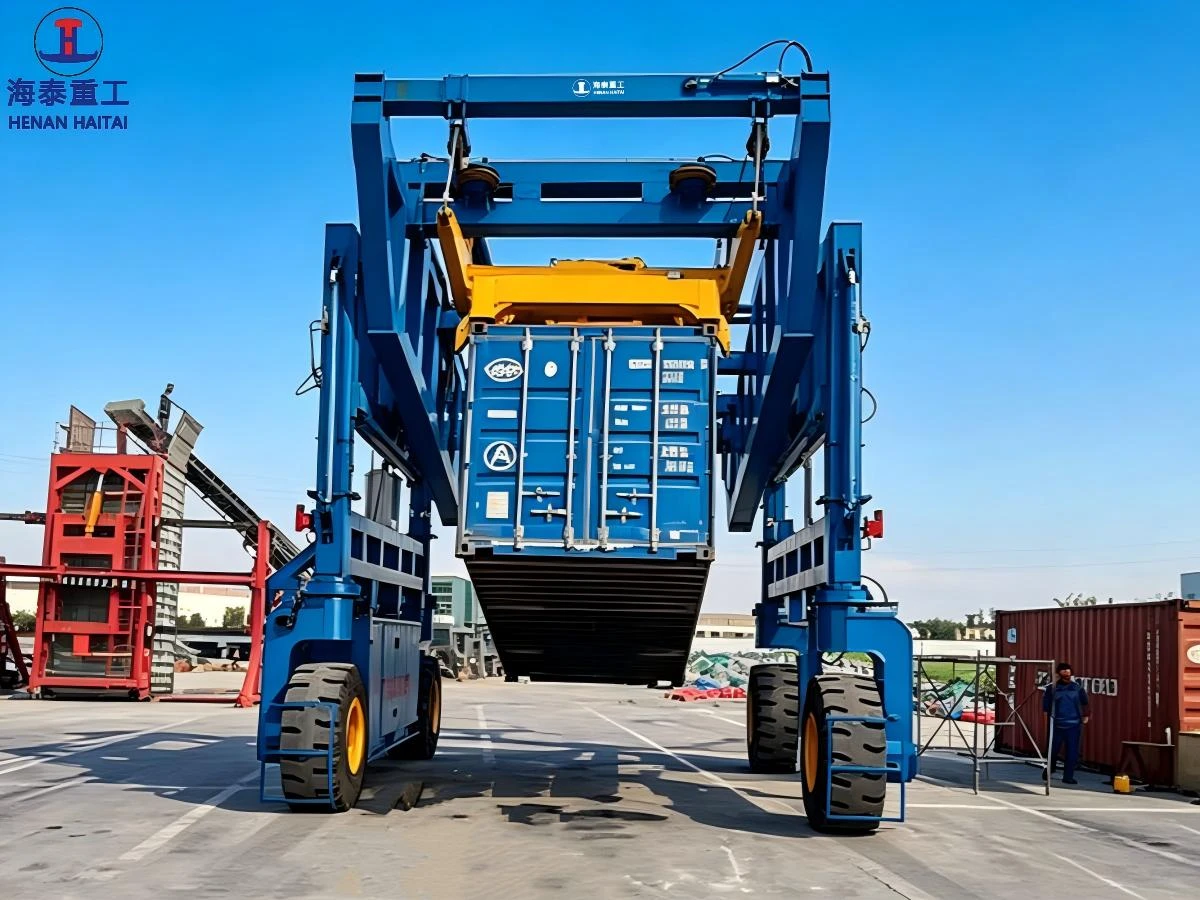
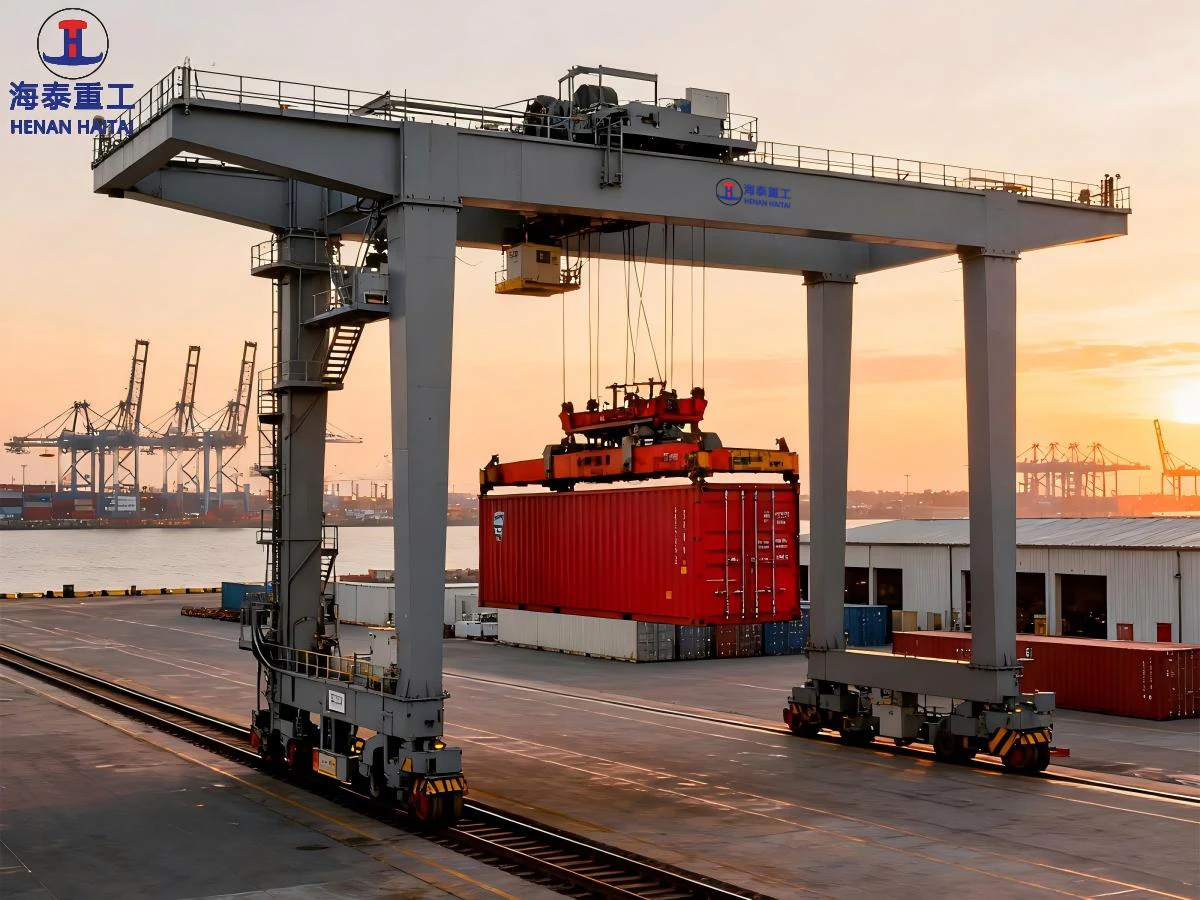
Container terminals across Europe are caught between two pressures that pull in opposite directions. Throughput is increasing — more vessels, more boxes, tighter turnaround windows. At the same time, environmental regulations, carbon pricing, and community noise standards are placing real constraints on how that throughput can be handled. Equipment that is merely powerful enough no longer meets the brief. It also needs to be efficient, low-emission, and intelligent.
This project delivered two 41T rubber tyred gantry crane to a container terminal operator in the Netherlands as part of a broader terminal upgrade programme. The RTG crane was engineered to address the customer’s specific operational challenges: yard congestion, stacking inefficiency, rising fuel costs, and the need for automation-ready equipment that would meet current European environmental standards and support future terminal development.
The project was completed on schedule. This case study documents the customer’s requirements, the technical solution developed, the project execution process, and the operational results following commissioning.
Customer Background and Project Challenges
Terminal Profile
The customer operates a medium-sized container terminal in the Netherlands, handling a growing volume of feeder and short-sea containerized cargo within one of Europe’s most competitive port markets. Dutch terminals operate in a demanding commercial environment — shipping lines expect fast vessel turnarounds, and cargo owners expect reliable, predictable landside connections. Any inefficiency in yard operations has direct commercial consequences at both ends of the supply chain.
Rising Throughput, Constrained Yard
Container volumes at the terminal had grown over the preceding years. The yard — originally designed for the terminal’s earlier throughput profile — was becoming increasingly congested during peak vessel discharge periods. Containers were dwell-ing longer in transfer zones, yard traffic was more frequently interrupted, and the existing container handling equipment was operating closer to its practical limits than the terminal’s operational planning had anticipated.
Specific Operational Challenges
Several interconnected problems framed the case for new equipment:
- Rising operational costs: Older handling equipment consumed more fuel per container move, required more frequent maintenance, and delivered lower throughput per operating hour than modern alternatives
- Limited yard utilization: The existing stacking configuration was not optimizing the use of available yard area — containers were stacked lower than the yard’s physical height allowed, reducing effective storage density
- Environmental compliance pressure: Dutch port operators operate under European Union emissions frameworks and national environmental regulations that impose real cost exposure on high-emission equipment fleets. The existing diesel-mechanical equipment was increasingly difficult to justify on both regulatory and financial grounds
- Vessel turnaround targets: Shipping line agreements required faster container discharge-to-yard cycles than the existing equipment could consistently deliver during peak operations
- Automation requirements: The terminal’s medium-term development plan included a transition toward more data-driven, automation-assisted yard management. New equipment needed to be compatible with that direction from the outset
Why the Customer Chose a 41T Rubber Tyred Gantry Crane
RTG Cranes Over Rail-Mounted Alternatives
The terminal evaluated rail-mounted gantry cranes (RMG) as part of the selection process. RMG systems offer higher automation potential but require permanent rail infrastructure that constrains yard layout flexibility and involves significant civil engineering investment. For a terminal that needed operational improvement quickly — and that wanted the flexibility to adapt its yard layout as throughput patterns evolved — the absence of fixed rail infrastructure was a meaningful advantage for the RTG option.
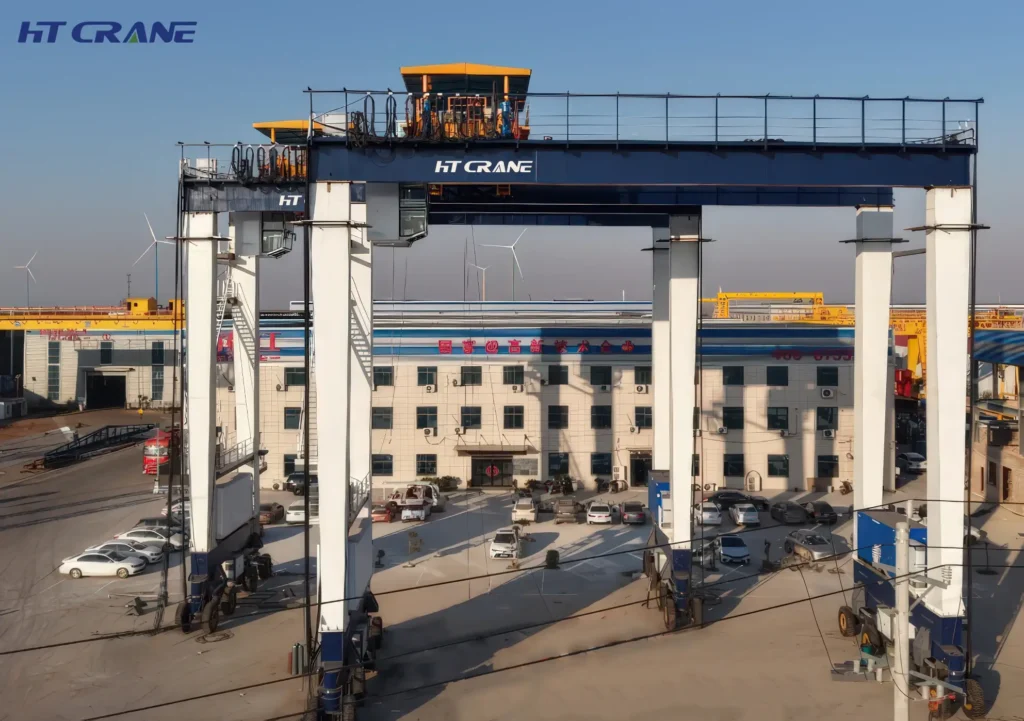
A rubber tyred gantry crane can be repositioned between container rows as yard utilization patterns change, reassigned to different areas of the terminal as operational needs shift, and integrated into automation systems incrementally rather than requiring a full infrastructure commitment upfront.
Why 41T Capacity Matched the Terminal’s Needs
Standard ISO containers reach maximum gross weights of 30.48 tonnes for 20-foot units under SOLAS regulations, with 40-foot units approaching similar limits in heavy-cargo configurations. A 41-tonne rated lifting capacity provides a reliable working margin above these maximums — ensuring the crane handles all standard container weights within its designed safety envelope without operating at the edge of its structural limits during routine heavy lifts.
This capacity headroom directly affects equipment longevity. Cranes routinely operating near their rated maximum experience accelerated wear on structural and mechanical components. Specifying 41T for a terminal handling standard ISO containers ensures the equipment performs within a comfortable operational band across its full service life.
Stacking Height and Space Efficiency
The customer’s existing equipment was limiting effective stack height. The specified RTG crane was configured for container stacking up to six containers high — significantly improving storage density within the fixed yard footprint. For a terminal where yard expansion is not an available option, increasing vertical storage utilization is the most practical path to higher effective capacity.
Customized Technical Solution
Core Specification
The RTG crane was designed around the following primary parameters:
- قدرة الرفع: 41 tonnes SWL
- Stacking height: Up to 6 containers high (plus 1 container in transit)
- فترة: Configured to straddle multiple container rows plus a truck lane — enabling direct truck loading and unloading beneath the crane without repositioning
- Crane dimensions: Approximately 30 metres in length, 13 metres in width, 25 metres in working height
These dimensions were confirmed during the engineering phase against the terminal’s yard layout drawings to verify that the crane’s turning radius, travel path, and working envelope were compatible with the existing yard infrastructure.
نظام القيادة
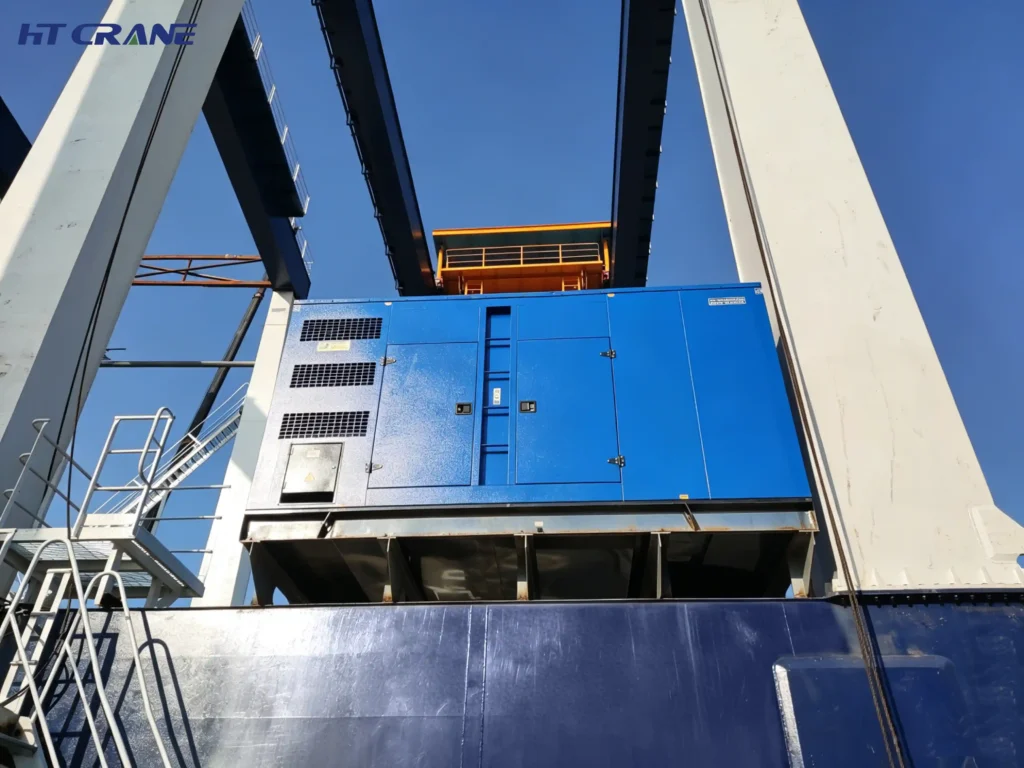
The crane was configured with a diesel-electric hybrid drive system. The diesel engine drives a generator; electric motors handle all crane motions — travel, hoisting, and trolley traversal. This configuration allows the engine to run at a consistent, efficient load point regardless of the crane’s instantaneous demand, reducing fuel consumption across the variable-load cycles of yard stacking operations. Regenerative braking during container lowering recovers energy and feeds it back into the system, further reducing net fuel consumption per container move.
Intelligent Control and Automation Features
- Anti-sway system: Electronic load stabilization that controls spreader swing during travel and positioning — reducing cycle time and improving stack placement accuracy without requiring additional operator skill
- Frequency conversion control: Variable frequency drives on all motion systems enable smooth, precise speed control for both travel and hoisting, reducing mechanical stress and improving positioning accuracy
- Automated monitoring system: Onboard telematics logging engine performance, lift cycles, fuel consumption, fault events, and structural load data in real time
- LED lighting system: High-output LED work lighting for reliable night operation — covering the crane’s full working area including the truck lane below
Structural and Environmental Specifications
- شهادة CE: Designed and documented to CE marking requirements under the EU Machinery Directive
- ISO manufacturing standards: Quality management system compliance throughout the production process
- FEM/DIN structural design standards: Structural calculations performed to European Federation of Materials Handling standards
- Reinforced anti-corrosion coating: Multi-layer system designed for coastal marine environments — zinc-rich primer, epoxy intermediate coat, and polyurethane topcoat over blast-cleaned steel
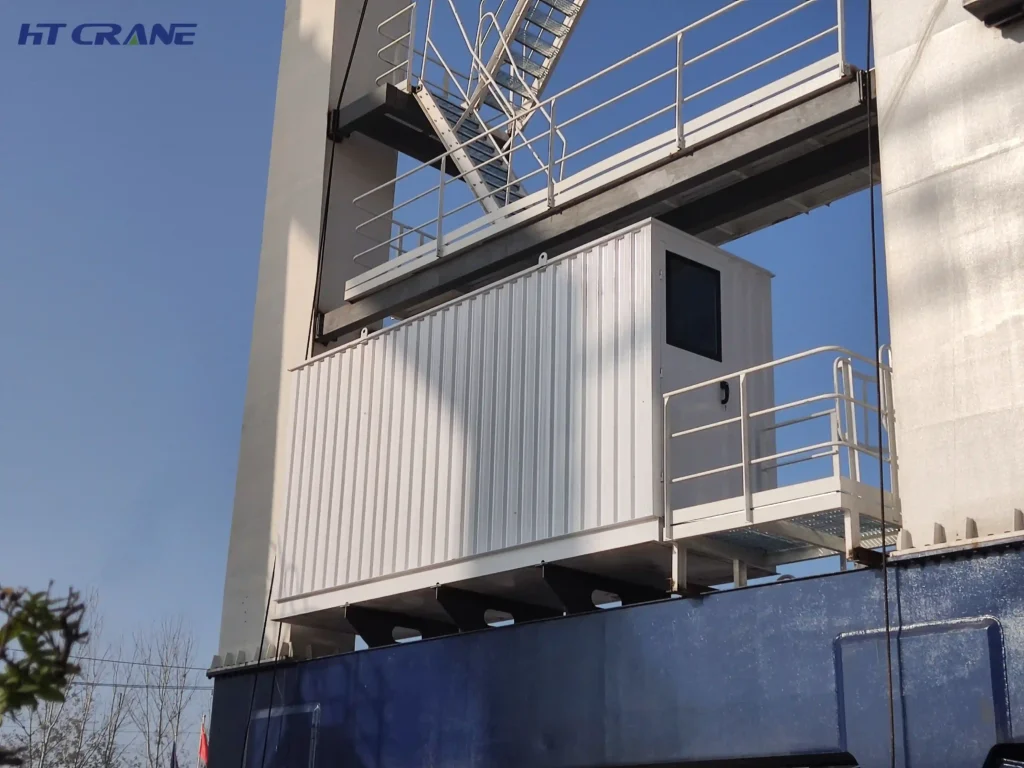
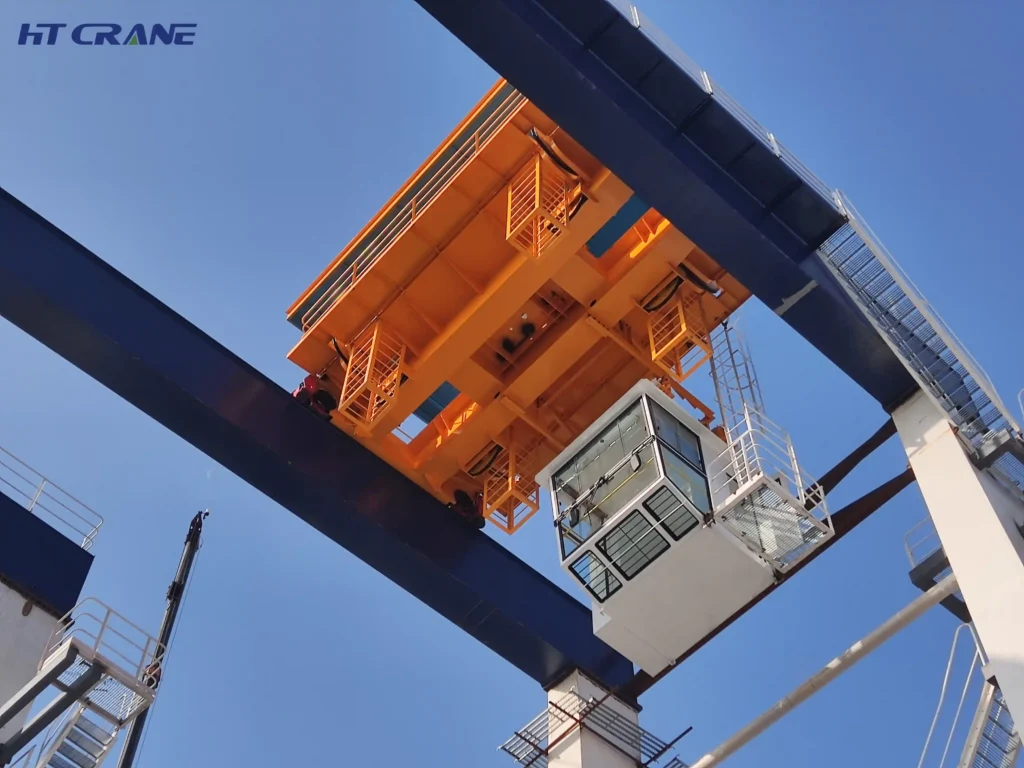
Manufacturing, Delivery, and Installation Process
Engineering Confirmation
Following order placement, the project engineering team conducted a detailed review of the terminal’s yard layout, reviewing turning radius requirements, rail foundation conditions (for the crane’s rubber tyre travel path), truck lane dimensions, and power supply specifications. Technical drawings were developed, reviewed with the customer’s engineering team, and formally approved before fabrication commenced. CE documentation was prepared in parallel with the design process.
Production Process
Manufacturing proceeded through the following sequence:
- Steel fabrication: Main structural components — portal frame, legs, bridge girder, and end beams — cut, formed, and welded to dimensional tolerances verified by in-process inspection
- Drive system assembly: Diesel-electric drivetrain components assembled and pre-tested at the sub-assembly stage before integration into the crane structure
- Electrical and control system integration: Control panels, telematics, anti-sway system, safety monitoring, and cab equipment installed and wired
- Surface treatment: Full corrosion protection system applied and inspected before final assembly
- Factory testing: Completed crane tested at rated 41T capacity, with all control, safety, and monitoring systems verified under load before release for shipment
Export Logistics
The assembled RTG crane was disassembled into transportable sections — portal frame, bridge girder, and mechanical components — for export. Sections were loaded as oversized cargo and shipped to the Netherlands by sea freight. Import documentation, CE certification package, and technical manuals were provided to the customer in advance of delivery to support customs clearance and port reception.
On-Site Commissioning
The manufacturer’s commissioning team supervised on-site assembly, structural connection, and electrical commissioning. Following mechanical completion, the crane underwent a full operational test sequence under load at the terminal. Operator training covered all crane functions, daily inspection procedures, telematics system access, and emergency response protocols. The crane was handed over to the terminal in fully commissioned, operationally ready condition — within the project schedule agreed at order placement.
Smart Port Automation Features
Intelligent Positioning Assistance
The positioning assistance system guides operators during container pickup and landing through visual and audio feedback. The system monitors spreader alignment relative to the container corner castings and provides real-time correction guidance. This reduces mis-picks, shortens average cycle time, and allows less experienced operators to achieve consistent precision — directly supporting the terminal’s workforce flexibility objectives.
Real-Time Equipment Monitoring
The telematics system transmits operational data to the terminal’s maintenance management platform continuously. Maintenance staff can monitor crane condition remotely — identifying developing faults before they cause unplanned downtime, scheduling servicing during planned breaks rather than responding to failures during operations. This shift from reactive to condition-based maintenance reduces both downtime frequency and total maintenance cost over the crane’s operating life.
Energy-Saving Technology
Drive management logic reduces engine output automatically during low-demand phases — traveling without a load, waiting for truck arrival, or during pauses in stacking sequences. Combined with regenerative energy recovery during lowering operations, this system meaningfully reduces fuel consumption per container move compared to conventional diesel-mechanical RTG cranes. For a European operator with carbon cost exposure, this reduction has both operational and compliance value.
Operational Results After Commissioning
Following commissioning and the initial operational period, the terminal reported measurable improvements across several dimensions:
- Improved container stacking efficiency: The six-high stacking capability increased effective yard storage density, reducing container dwell time in transfer zones and improving overall yard utilization
- Smoother yard traffic flow: Optimized truck lane integration reduced vehicle queuing during discharge operations, improving landside throughput during peak vessel calls
- Reduced fuel consumption: The diesel-electric drive system delivered lower fuel consumption per container move than the equipment it supplemented — a direct reduction in both operating cost and yard CO₂ emissions
- Lower maintenance frequency: Condition-based maintenance scheduling, enabled by the telematics system, reduced unplanned downtime events in the months following commissioning compared to the terminal’s previous experience with older equipment
- Faster container transfer operations: Anti-sway control and positioning assistance reduced average cycle time per lift, increasing the number of container moves per operating hour without additional labor
- Improved operational safety: The anti-collision system and overload monitoring contributed to a cleaner safety record in the container yard during the initial operating period
The terminal’s operations management confirmed that the RTG crane performed as specified and expressed interest in further equipment cooperation for the terminal’s planned next-phase development.
خاتمة
This project demonstrates the practical value of a purpose-engineered RTG crane solution in a real European port upgrade context. One 41T rubber tyred gantry crane, configured specifically for a Dutch terminal operator’s yard dimensions, throughput requirements, and environmental compliance targets, was manufactured, certified, exported, and commissioned on schedule — delivering measurable improvements in stacking efficiency, yard traffic flow, fuel consumption, and operational safety from the first weeks of operation.
For container terminal operators evaluating yard equipment upgrades — particularly in the European market where efficiency, automation readiness, and emissions compliance are active procurement criteria — a modern rubber tyred gantry crane represents a technically proven and commercially practical investment in terminal performance.
Request a customized RTG crane solution built around your terminal’s container mix, yard layout, stacking requirements, and throughput targets. Contact us for a port upgrade consultation — our engineering team works with terminal operators to develop RTG specifications matched to real operational requirements. Discuss your container terminal project with our engineering team and receive a technical assessment of how RTG crane integration fits your development plans.