
In 2021, Haitai supplied a 60 ton, 12.1m-span RTG crane to a customer in Saudi Arabia for heavy-duty yard lifting and material handling. The rubber-tyred design lets the crane reposition across the yard without fixed rails, giving the operation more flexibility in how the site is laid out.
Project Overview of 60 Ton RTG Crane to Saudi Arabia
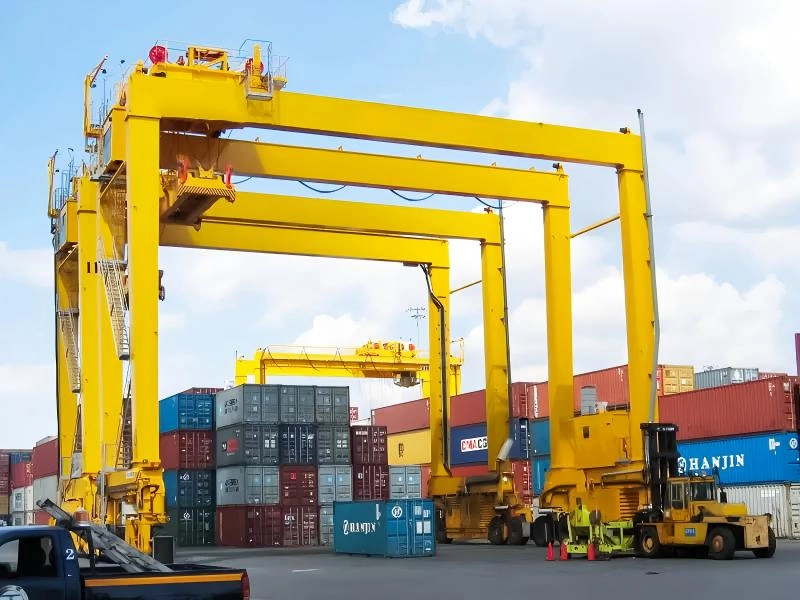
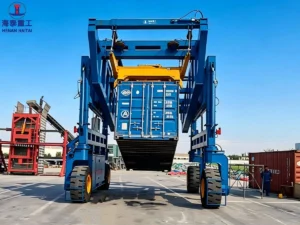
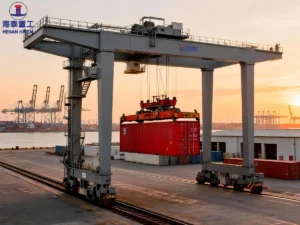
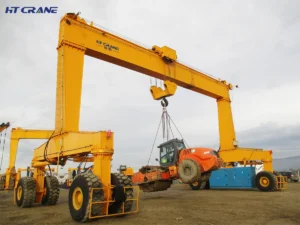
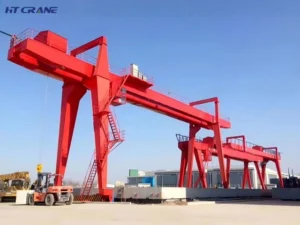
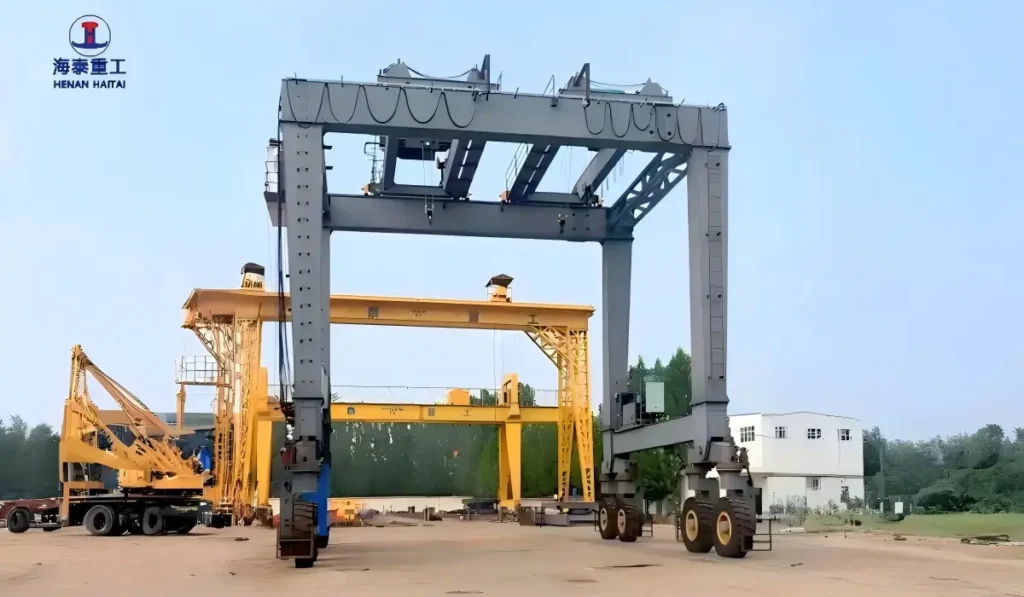
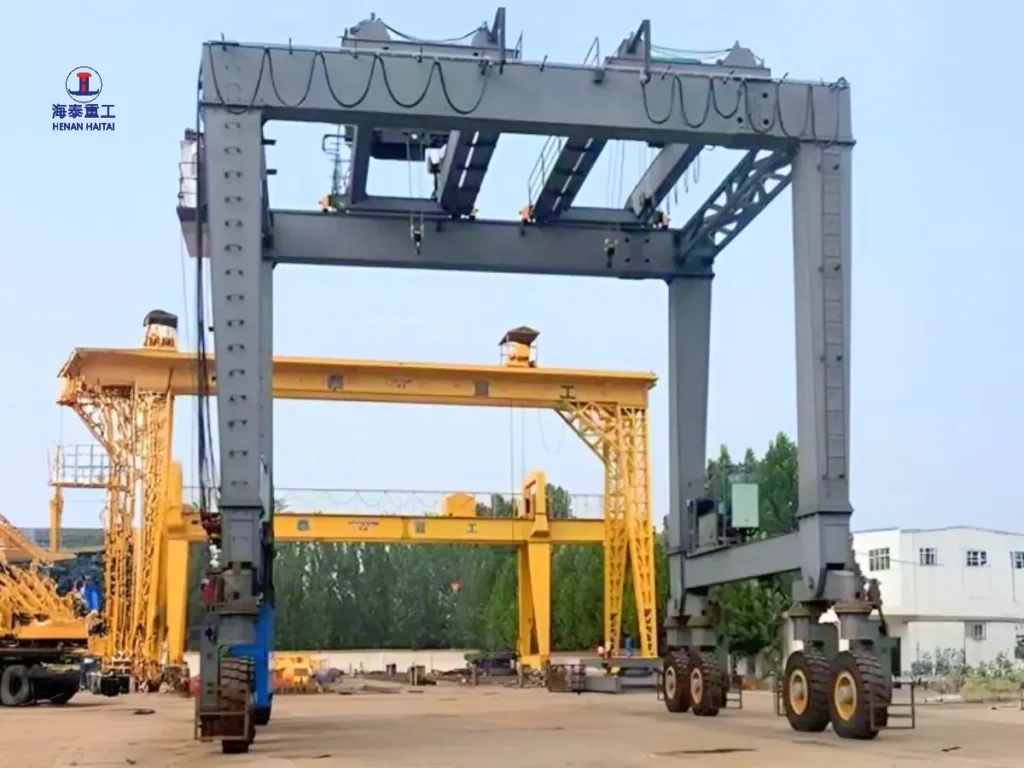
In 2021, HT Crane supplied a heavy 60 ton rubber-tyred gantry (RTG) crane, built with a 12.1-meter span, to a customer in Saudi Arabia for heavy-duty yard lifting. The project image is as shown in the figure on the right.
Because the double girder gantry crane runs on rubber tires instead of fixed rails, it can reposition across the working area as the yard’s operating needs change, rather than being locked to a single travel path.
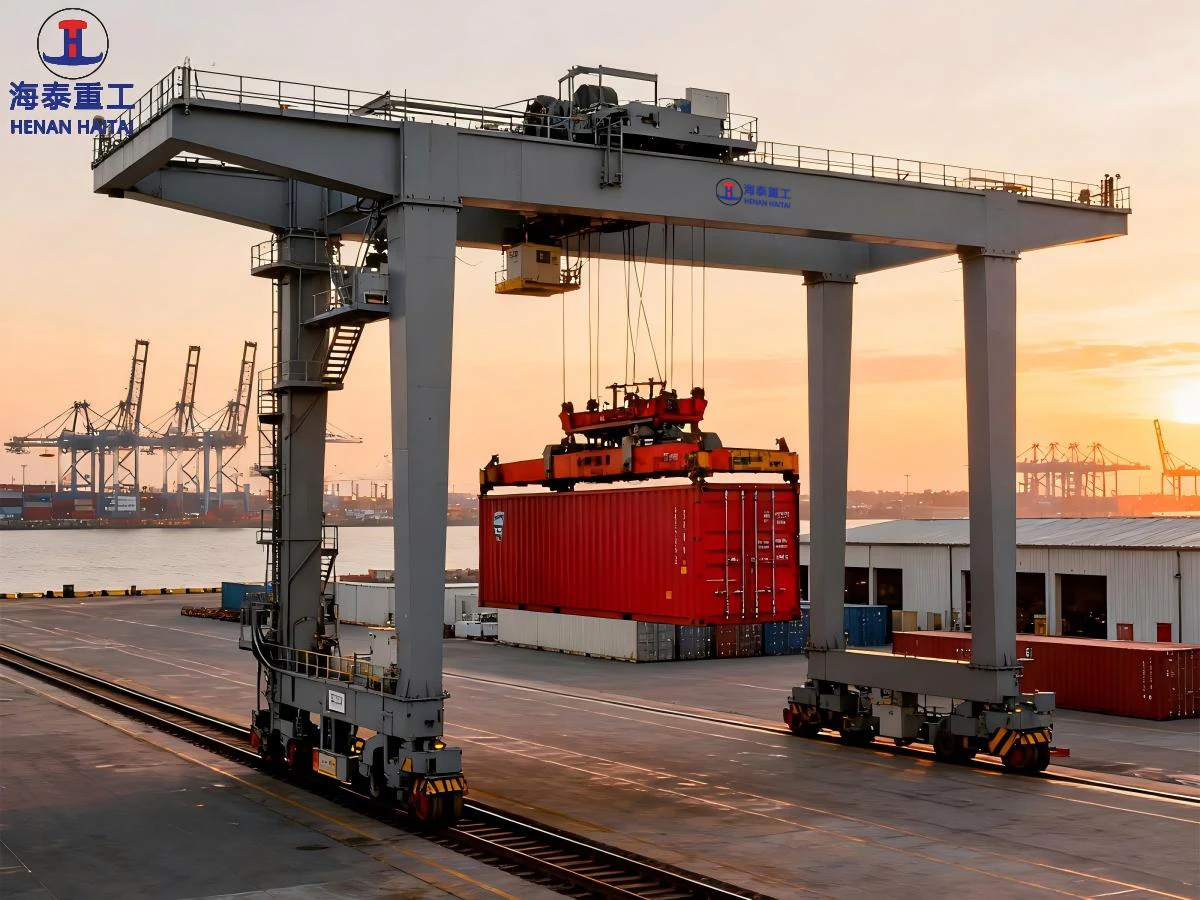
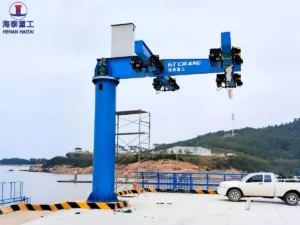
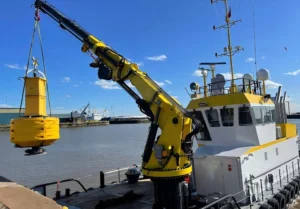
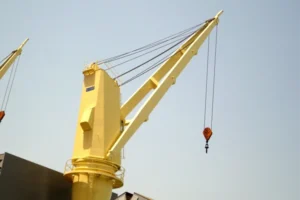
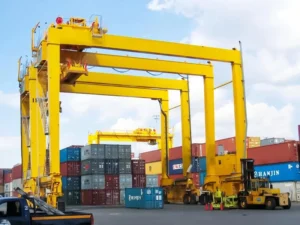
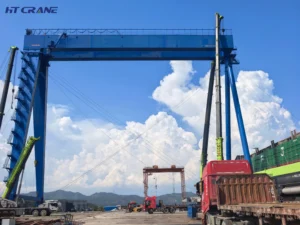
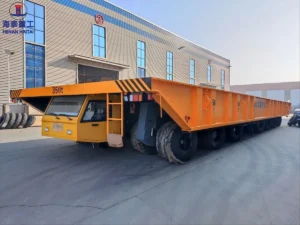
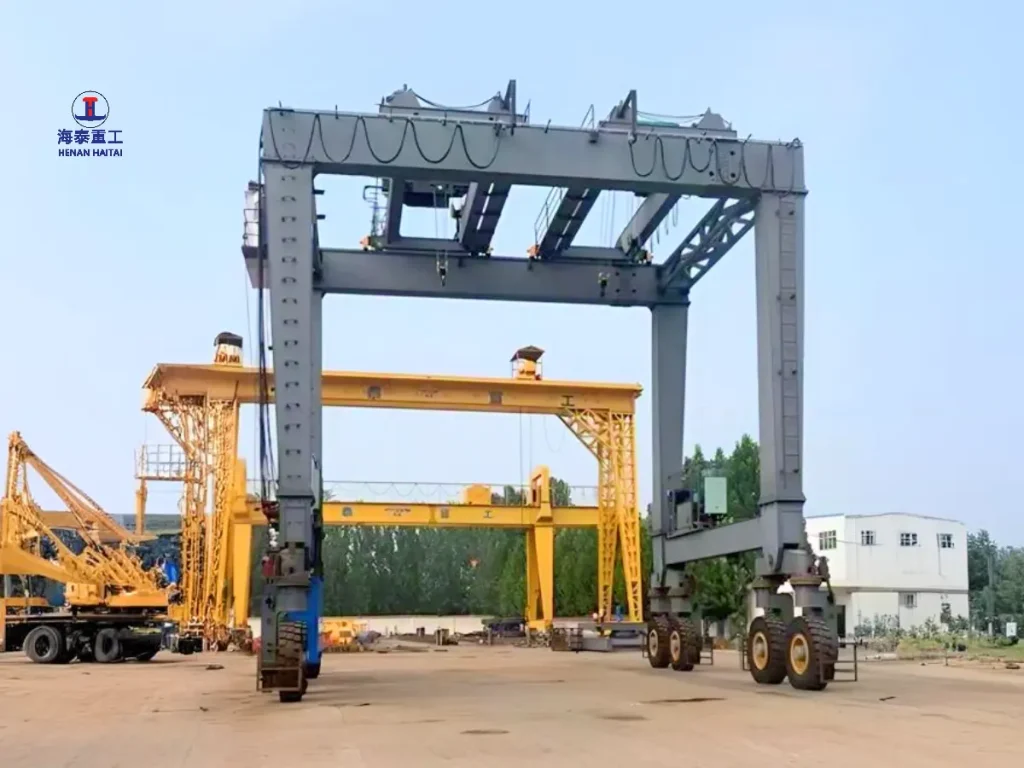
The project photos show the Haitai 60 ton rtg crane on site in the yard, standing beside another Haitai gantry unit and a mobile crane also delivered to the same customer.
The multi-wheel bogies at each corner leg carry the structure across the yard surface, with the hoisting mechanism and wire rope reeving mounted along the top girder and the electrical control cabin fitted to one leg for continuous outdoor duty.
RTG Crane Saudi Arabia Project Details
| Project | 60 Ton RTG Crane to Saudi Arabia |
|---|---|
| Manufacturing Year | 2021 |
| Equipamento | Rubber-Tyred Gantry (RTG) Crane |
| Capacidade de elevação | 60 Tons |
| Span | 12.1 m |
| Aplicativo | Heavy-Duty Yard Lifting and Material Handling |
| Destination | Saudi Arabia |
| Supplier | Henan Haitai Heavy Industry Co., Ltd. (Haitai Crane) |
Why a 60 Ton, 12.1m-Span RTG Crane Fits This Application?
An RTG crane suits sites where both lifting capacity and layout flexibility matter. Unlike a rail-mounted gantry crane, which is fixed to a defined track once installed, an RTG crane can be repositioned if the yard’s storage layout or traffic pattern changes later — useful for a facility still settling into its final operating plan.
The 12.1-meter span gives the crane enough clear width to straddle a working lane or stacked load beneath the girder, while the 60-ton rated capacity leaves margin for heavier lifts within the approved configuration. The actual safe working load at any given radius still depends on the confirmed lifting chart, rigging, and site conditions, and should always be verified during technical design rather than assumed from the headline tonnage.
Engineering the 60 Ton RTG Crane for Saudi Arabia’s Operating Conditions
Outdoor lifting equipment operating in Saudi Arabia has to account for high ambient temperatures, sand and dust exposure, and yard surfaces that may not be paved to the same standard as a container terminal.
For this project, Haitai’s engineering team reviewed the customer’s yard surface, travel distance, lifting frequency, and power supply before finalizing the crane’s configuration, rather than adapting a standard catalog unit after the fact.
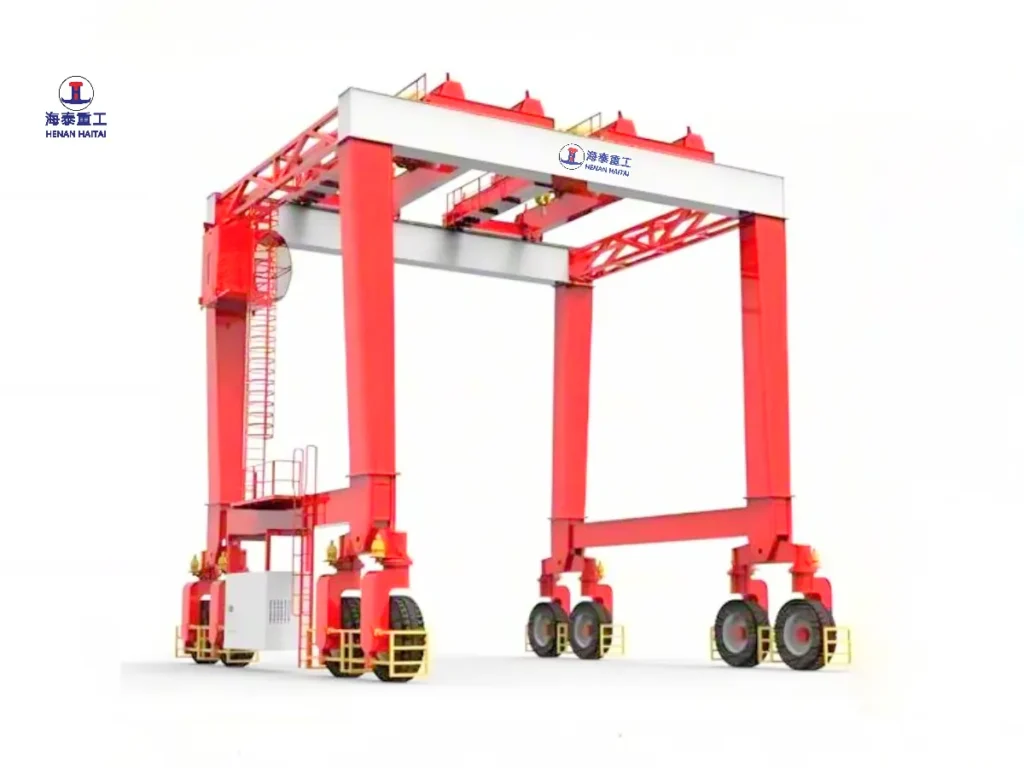
The rubber-tyred undercarriage uses multiple large tires to spread the crane’s weight across the yard surface and keep travel stable under load, and the steel structure carries a protective coating suited to sustained outdoor exposure.
Configuration rendering photo is as shown in the figure on the right: 3D design illustration of the 60 ton RTG crane’s structure. (Image: Haitai Crane)
Manufacturing and Quality Control
Before shipment, the hydraulic RTG crane went through Haitai’s standard fabrication and inspection sequence: structural welding, mechanical assembly, electrical installation, surface treatment, and functional testing.
An RTG crane depends on several systems working together — gantry rigidity, the traveling wheels and drive, the hoisting mechanism, the electrical system, and the safety interlocks — so factory testing checks the crane as a complete unit rather than component by component. For an international shipment, this stage also produces the technical documentation the customer needs for import, installation, and commissioning on-site.
Benefits of the Haitai 60 Ton RTG Crane in Saudi Arabia
The main advantage of this configuration is combining 60-ton lifting capacity with the ability to reposition the crane as yard needs change, which a rail-mounted crane cannot do without new track work. That combination suits industrial yards, container handling areas, precast concrete plants, and shipyard-adjacent operations where the load points aren’t always fixed.
For a Saudi Arabian buyer, equipment that tolerates heat and dust with minimal added maintenance burden matters as much as rated capacity — which is why the surface treatment and component selection for this unit were specified for outdoor desert conditions rather than a general-purpose build.
Project Photos
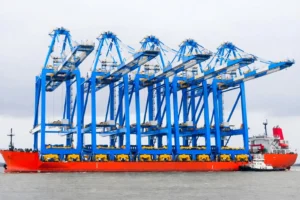
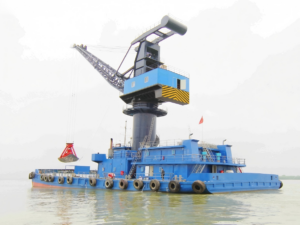
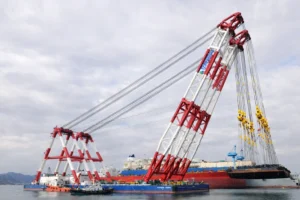
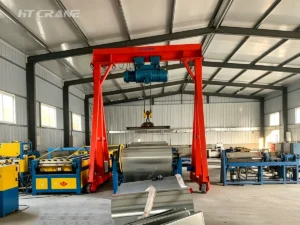
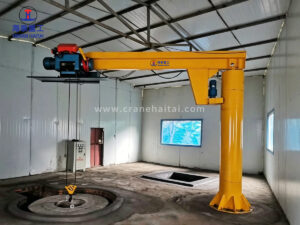
The photos below show the actual 60 ton, 12.1m-span RTG crane on site, alongside another Haitai gantry crane and a mobile crane delivered to the same customer, followed by a 3D configuration rendering of the crane’s design.
Choosing a Supplier for This Kind of Project
Specifying an RTG crane for Saudi Arabia is more than confirming a tonnage number — the yard surface, ambient conditions, travel pattern, and load type all shape the final configuration. Haitai’s engineering team reviews lifting capacity, span, lifting height, travel requirements, and power configuration with the customer before production starts, which is how this 2021 Saudi Arabia project reached its final specification. Buyers evaluating a similar purchase should expect the same process: share the yard and load details early, and treat the crane’s configuration as a design exercise rather than a catalog selection.
Conclusão
The 2021 delivery of this 60 ton RTG crane to Saudi Arabia shows how a rubber-tyred gantry crane can give a heavy-duty yard both lifting capacity and the flexibility to reposition equipment as operations evolve. Haitai configures each RTG crane around the customer’s lifting capacity, yard layout, and environmental conditions rather than shipping a fixed design — for a new RTG crane project in Saudi Arabia or elsewhere, sharing site and load details early is the fastest way to reach a workable specification.

Perguntas frequentes
Q1. Can HT Crane customize 50 ton, 60 ton, 70 ton, 80 ton, 90 ton RTG cranes?
Yes, HT Crane can customize 50 ton, 60 ton, 80 ton, 90 ton RTG cranes. Lifting capacity, span, lifting height, travel requirements, and power configuration can all be adjusted to the customer’s site and load requirements.
Q2. What makes an RTG crane different from a rail-mounted gantry crane?
An RTG crane travels on rubber tires instead of fixed rails, so it can be repositioned across a yard as the layout or workflow changes, where a rail-mounted crane stays fixed to its track.
Q3. Is an RTG crane suitable for use in Saudi Arabia?
Yes, with the configuration adjusted for local conditions — ambient temperature, dust exposure, and yard surface all factor into the final design, along with the applicable lifting standards for the project.
Q4. What industries use a 60 ton RTG crane?
Industrial yards, container handling areas, precast concrete plants, shipyard-adjacent operations, and other heavy material handling sites where load points are not fixed to one location.
Q5. What information does Haitai need to quote an RTG crane?
Required lifting capacity, lifting height, span, travel distance, working area, load type, lifting frequency, power supply, and site or installation conditions — Haitai’s engineering team can recommend a configuration once these are confirmed.