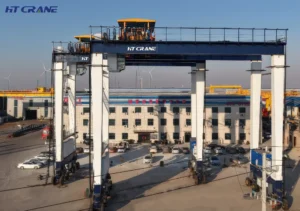
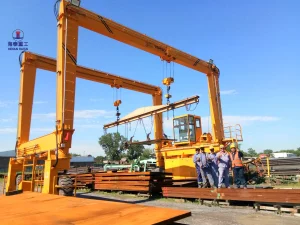
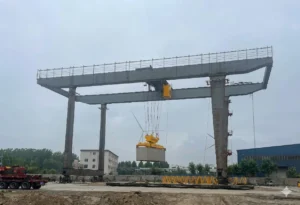
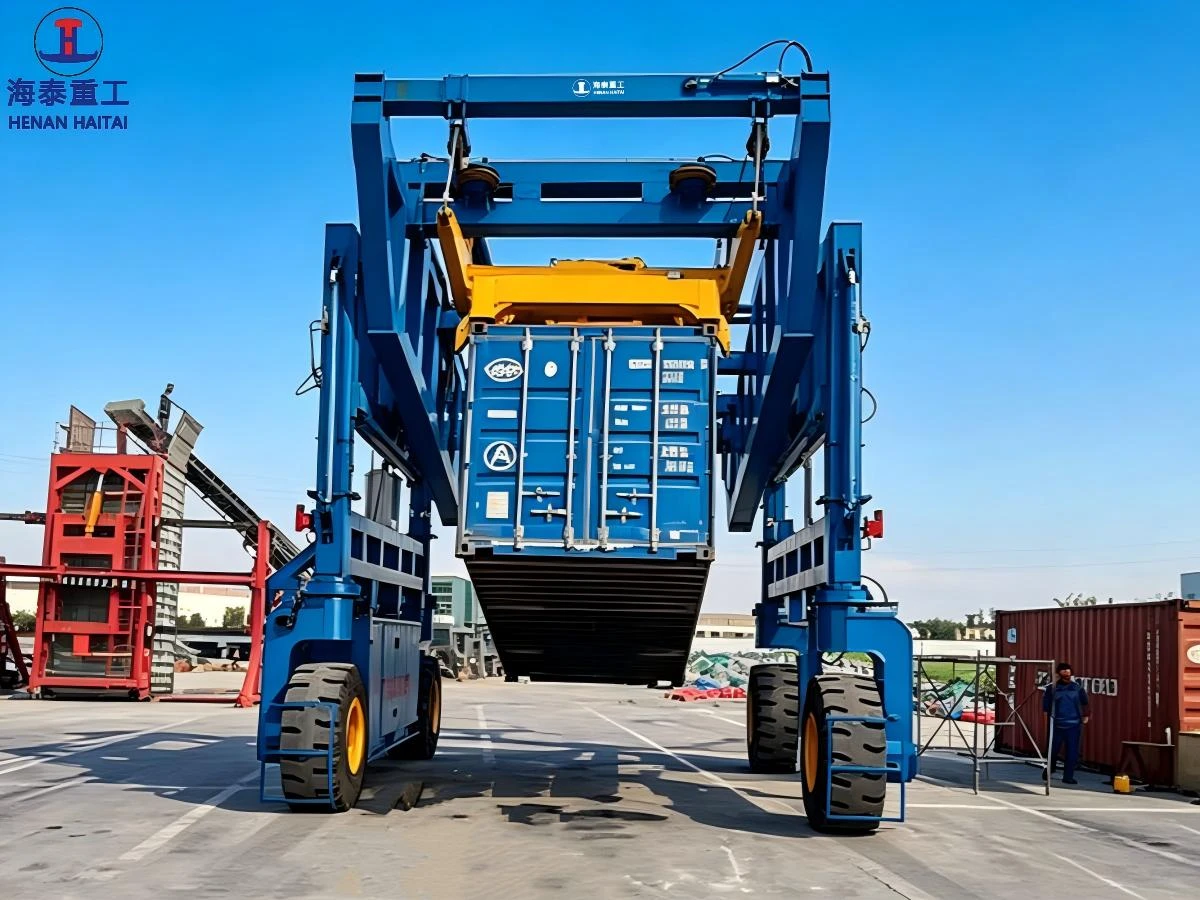
Container terminals are under pressure to move more cargo faster, at lower cost, and with fewer emissions. The straddle carrier remains one of the most flexible tools available to meet those demands. It can pick, transport, and stack containers without fixed infrastructure, making it adaptable to a wide range of terminal layouts and throughput levels.
For medium and large container terminals, the 40 ton straddle carrier is the most common configuration. It handles standard 20ft and 40ft containers, stacks them two or three high, and integrates into both conventional and automated terminal operations. But selecting the right unit is not straightforward. Buyers must weigh technical specifications, automation level, drive system, supplier capability, and long-term operating cost — all of which vary considerably across the global market.
This guide provides a structured framework for that decision. It covers what you need to know about specs, pricing factors, lifecycle costs, and supplier evaluation before committing to a procurement.
What Is a 40 Ton Straddle Carrier?
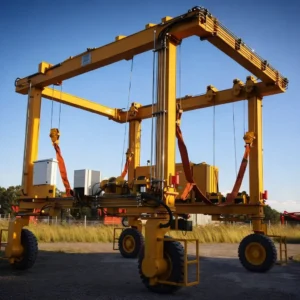
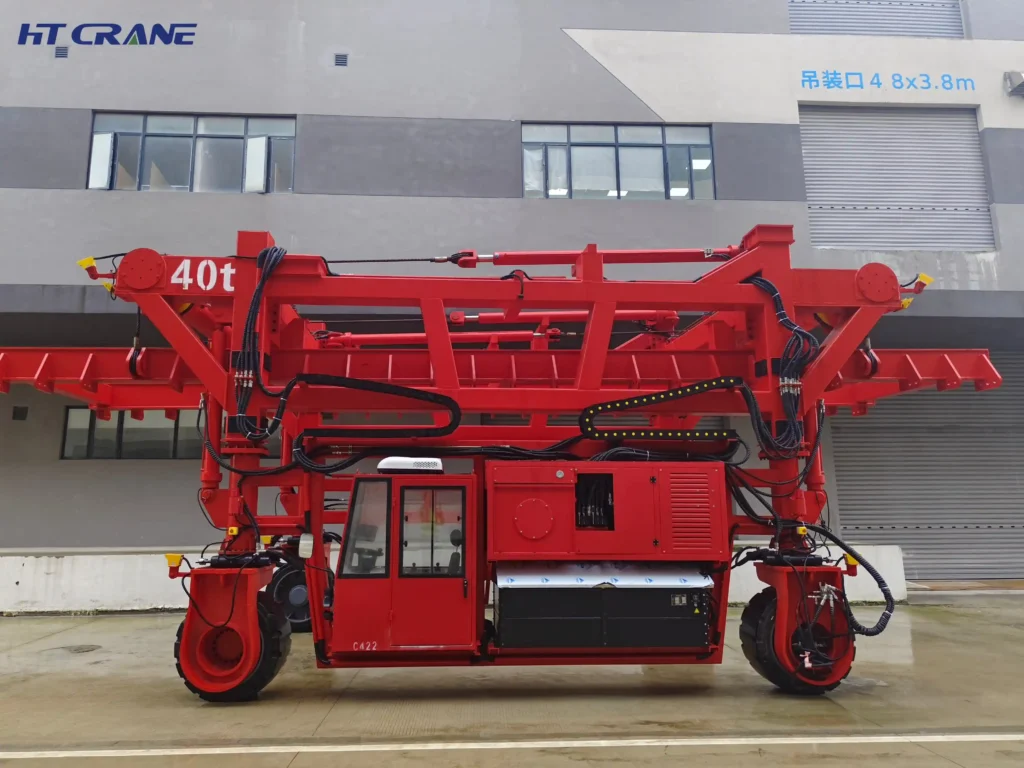
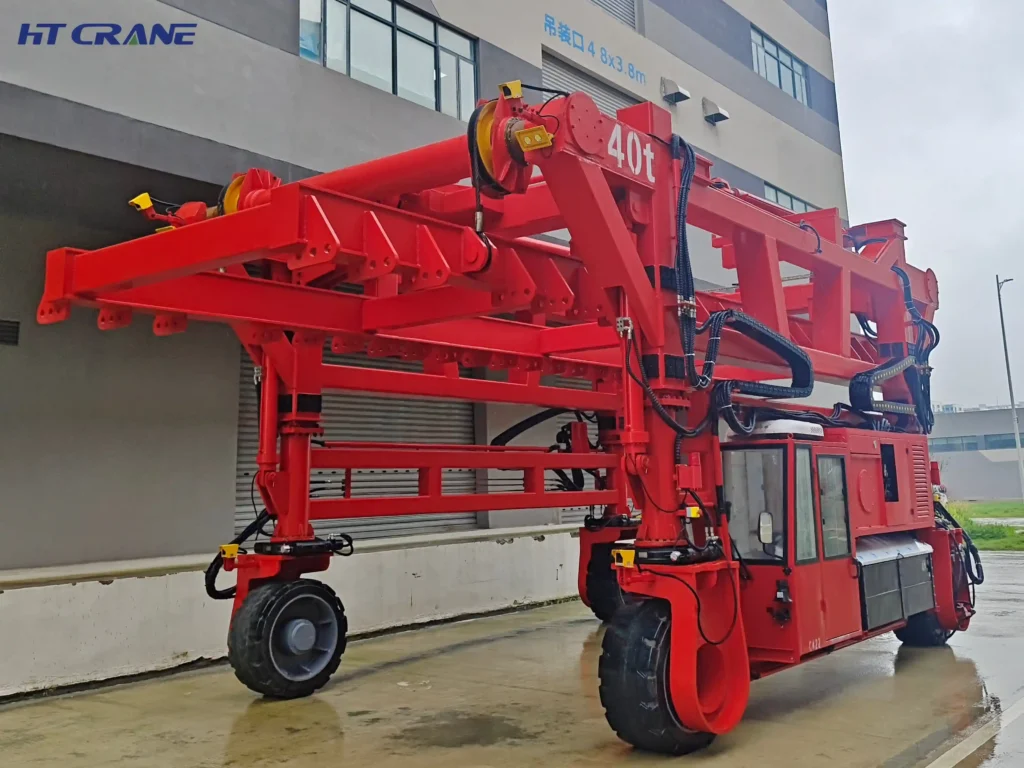
A straddle carrier is a self-propelled rubber-tyred vehicle that straddles a container, lifts it using a top-spreader attached to a vertical lifting frame, and transports it within a terminal yard. Unlike reach stackers, which handle containers from the side, straddle carriers work from above — allowing them to pick from and deposit to ground-level stacks without additional handling equipment.
Aplicações comuns
- Container terminal yard operations
- Intermodal rail-road transfer facilities
- Logistics hubs and inland container depots
- Smart port automation systems
- Medium-volume cargo terminals
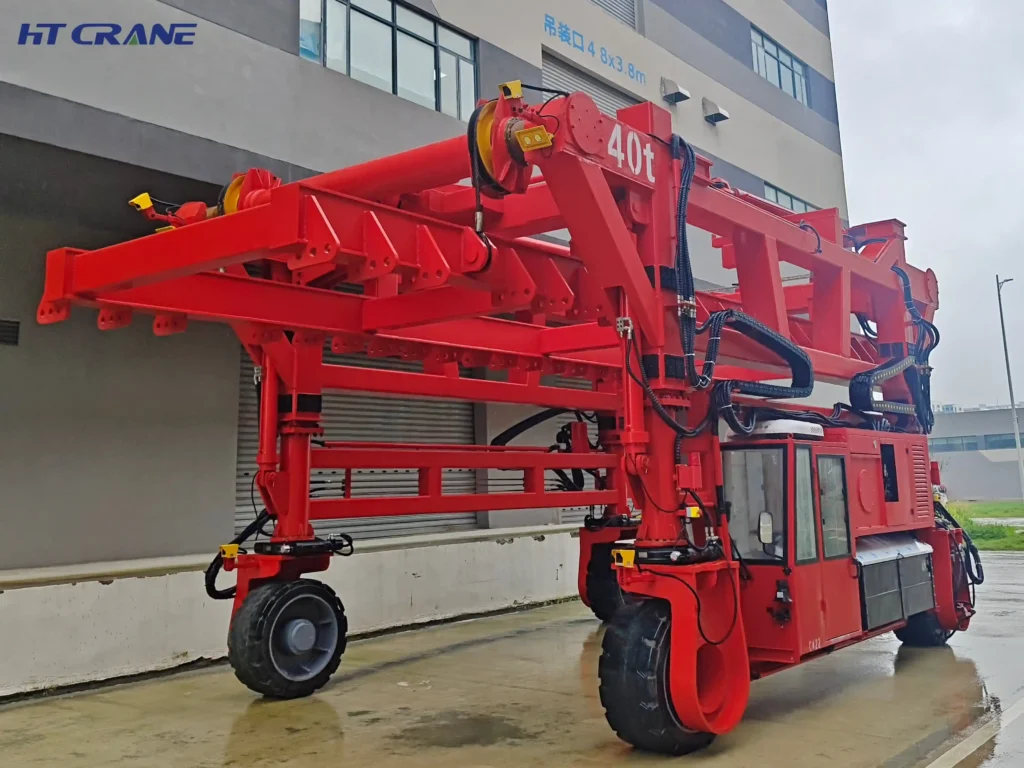
Major Components
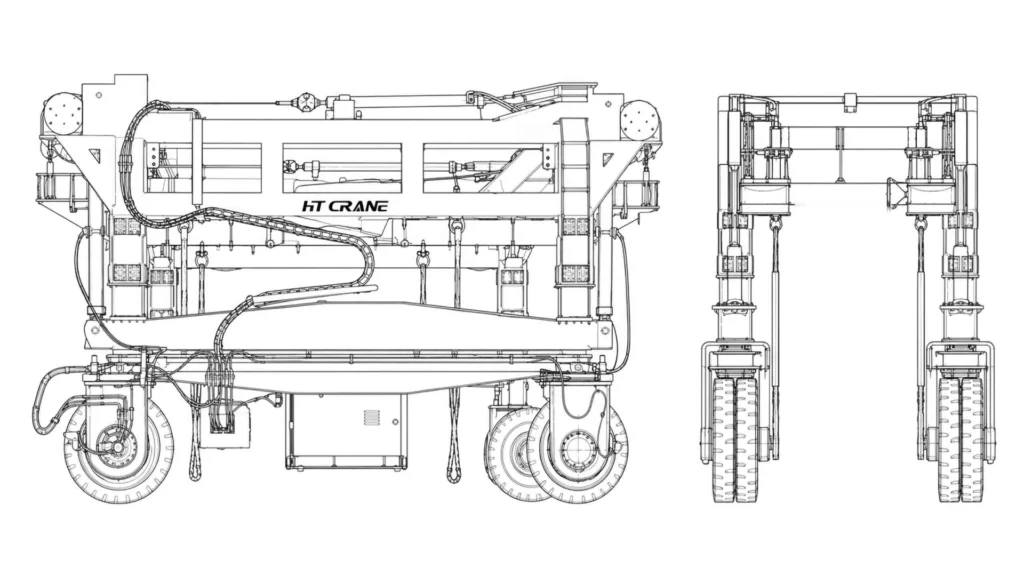
Lifting Frame and Spreader: The structural portal frame spans the container width. A telescoping spreader locks onto the container’s corner castings and provides the mechanical interface for lifting. Modern spreaders adjust to handle both 20ft and 40ft containers.
Steering and Drive System: Most 40 ton straddle carriers use multi-wheel steering, which allows the machine to travel in straight lines, diagonals, and crabbing motions. This flexibility is critical in high-density yard environments. Drive systems range from conventional diesel to diesel-electric hybrid and fully electric configurations.
Cabine do operador: The elevated cabin gives the operator a clear view of the spreader, container, and surrounding yard. Ergonomic design, air conditioning, and low-vibration mounting are standard requirements for high-productivity terminal operations.
Wheel Assembly: Typically four to eight large pneumatic tyres provide ground support. Tyre configuration affects turning radius, ground pressure, and maintenance frequency.
Typical Specifications of a 40 Ton Straddle Carrier
Technical specifications vary between manufacturers, but the following ranges reflect mainstream configurations available in the current global market.
| Especificação | Faixa típica |
|---|---|
| Capacidade de elevação | 40 tons (gross container weight) |
| Container Compatibility | 20ft / 40ft ISO standard |
| Altura de empilhamento | 1-over-2 or 1-over-3 |
| Loaded Travel Speed | 25 – 30 km/h |
| Unloaded Travel Speed | 30 – 35 km/h |
| Sistema de acionamento | Diesel, Diesel-Electric Hybrid, or Full Electric |
| Modo de direção | Multi-wheel (all four axle ends) |
| Lifting System | Hydraulic or electric-hydraulic |
| Spreader Type | Telescoping twin-lift capable |
| Overall Working Width | Approx. 6.0 – 6.5 m |
| Stack Clearance Height | Approx. 9.5 m (1-over-3 configuration) |
Additional System Features
Anti-Sway System: Electronic anti-sway control dampens container pendulum motion during high-speed travel and landing, reducing cycle time and improving stack accuracy.
Intelligent Positioning: GPS and laser-based positioning systems guide the operator or automated control system to precise stack locations. This is essential for terminal management system (TMS) integration.
Safety Systems: Standard safety packages include proximity detection, overload protection, tyre pressure monitoring, fire suppression, and operator presence detection.
Operator Ergonomics: Modern straddle carriers prioritize low-noise cabins, adjustable seating, joystick controls, and high-definition camera systems to reduce operator fatigue during multi-shift operations.
What Affects 40 Ton Straddle Carrier Price?
The purchase price of a container straddle carrier is determined by a combination of technical configuration, automation level, and supplier-specific factors. Understanding these variables helps buyers avoid both over-specification and costly under-specification.
Lifting Capacity and Stacking Height
A 1-over-2 stacking configuration requires less structural height and lower lifting force than a 1-over-3 system. The additional clearance height required for three-high stacking demands a taller, heavier portal frame with stronger structural sections, larger hydraulic cylinders, and a higher-capacity lifting drive. The incremental engineering complexity increases the base unit cost and also raises maintenance requirements over the machine’s life.
Nível de automação
This is the single largest price differentiator in the current market.
- Operação manual — standard cabin-operated machines — represent the lowest initial investment. The operator controls all functions from the cabin, with electronic aids available but no autonomous movement.
- Semi-automated systems retain a human operator for fine positioning and landing but use automated travel routing between stack positions. These systems require terminal management system integration, onboard positioning hardware, and communication infrastructure.
- Fully automated straddle carriers operate without a cabin operator. All travel, positioning, and stacking is managed by the terminal automation system, with remote supervision only. These machines carry significant additional cost in hardware, software, safety sensing, and commissioning complexity — but deliver the highest throughput efficiency and lowest per-move labor cost over the machine’s lifecycle.
Sistema de acionamento
- Diesel: Lowest initial cost. Established maintenance ecosystem. Higher long-term fuel and emissions cost.
- Diesel-Electric Hybrid: The dominant configuration in current procurement cycles. Electric motors drive the wheels; a diesel generator provides power. Energy recovery during lowering and braking extends fuel efficiency by 25–35% compared to conventional diesel systems. The added powertrain complexity increases purchase price but reduces operating cost.
- Full Electric: Battery-electric straddle carriers are now commercially available from several manufacturers. Zero direct emissions, lower energy cost, and reduced drivetrain maintenance. Higher initial investment and dependency on terminal charging infrastructure. Increasingly viable as terminal operators face port emissions regulations and rising diesel costs.
Safety and Smart Features
Anti-collision radar, 360-degree camera systems, dynamic stability monitoring, and predictive maintenance diagnostics add measurable value to terminal operations but also add to the unit price. For automated variants, these systems are mandatory rather than optional. For manually operated machines, the cost-benefit depends on the terminal’s risk profile and incident history.
Customization Requirements
Standard machines are designed for typical temperate-climate port environments. Operating in extreme cold, high-humidity tropical conditions, corrosive marine environments, or high-wind coastal terminals requires specification changes: sealed electrical systems, corrosion-resistant coatings, modified tyre compounds, or structural reinforcement for wind loading. Each customization adds to the base unit cost and may extend the manufacturing lead time.
Estimated 40 Ton Straddle Carrier Price Range
Straddle carrier pricing is not publicly listed and varies considerably based on configuration, supplier, order volume, and regional market conditions. The ranges below reflect realistic market positioning rather than binding quotations.
| Configuração | Estimated Price Range (per unit) |
|---|---|
| Standard Diesel, Manual Operation | USD 500,000 – 700,000 |
| Diesel-Electric Hybrid, Manual/Semi-Auto | USD 600,000 – 800,000 |
| Full Electric, Manual Operation | USD 800,000 – 1000,000 |
| Fully Automated System (any drive type) | USD 1000,000 – 1300,000+ |
These figures cover the machine itself. Buyers should separately budget for:
- Ocean freight and port delivery: USD 30,000 – 80,000 per unit depending on origin and destination
- Commissioning and operator training: USD 20,000 – 50,000 per unit
- Terminal infrastructure: Charging systems for electric variants; positioning beacon infrastructure for automated systems
- Spare parts initial stock: Typically 3–5% of unit price for the first two years
Buyers comparing quotes from different suppliers should ensure these elements are consistently included or excluded across all quotations to make a valid comparison.
Supplier Comparison — What Buyers Should Evaluate
Selecting a 40 ton straddle carrier supplier involves evaluating capability across multiple dimensions, not just comparing price per unit.
Manufacturing Experience
Suppliers with a long history of port equipment projects bring proven engineering solutions, tested component selections, and an understanding of terminal operational requirements. Ask for reference projects, fleet sizes in service, and export track record. A supplier that has delivered and commissioned multiple machines in different terminal environments represents lower project risk than an inexperienced manufacturer offering a competitive price.
Customization Ability
Few terminals have identical requirements. Stacking patterns, container mix, ground conditions, climate, and automation ambitions all drive specification differences. Suppliers with in-house engineering capability can adapt designs to match specific terminal requirements. Those dependent on fixed product catalogues with minimal flexibility may not be suitable for complex or non-standard applications.
Quality Standards and Certifications
For export to European markets and many other regulated environments, CE certification is a minimum requirement. ISO 9001 quality management certification demonstrates production process control. FEM (Fédération Européenne de la Manutention) standards provide classification frameworks for container handling equipment design and load calculations. Confirm which certifications apply and request copies of current certificates rather than accepting verbal assurances.
After-Sales Support
This is frequently underweighted in procurement decisions and overweighted in post-purchase regret. Evaluate: response time commitments for technical support, parts availability and lead times, whether remote diagnostics are available for the control system, and whether the supplier has local or regional service representation in your operating geography. Multi-year service agreements that include planned maintenance scheduling and parts supply are worth pricing separately during procurement.
Delivery Time and Logistics
Manufacturing lead times for heavy port equipment typically run 3–6 months from contract signing, depending on the supplier’s order book and the complexity of the specification. Export transportation for machines of this size requires specialist heavy-lift logistics. Confirm the supplier’s experience with export shipping, port clearance, and delivery to terminal, and establish clear responsibility for any transit damage.
Smart Port Trends and Future Development
The industry is moving in several directions that directly affect straddle carrier procurement decisions today.
- Electrification: Port emissions regulations in Europe, North America, and parts of Asia are creating strong incentives for zero-emission terminal equipment. Battery-electric straddle carriers are moving from pilot projects to volume procurement in progressive terminals.
- Automation Expansion: Fully automated straddle carrier systems, once limited to greenfield terminals with the capital to build complete automation infrastructure, are now being retrofitted into existing conventional terminals using incremental automation pathways.
- AI-Assisted Logistics: Integration of machine learning into terminal management systems allows dynamic optimization of straddle carrier routing, stack positioning, and fleet utilization in real time.
- Remote Fleet Management: Cloud-based fleet monitoring platforms allow terminal operators to track fleet utilization, fuel consumption, maintenance status, and productivity metrics across multiple machines and terminal locations from a single interface.
- Low-Emission Pressure: Beyond full electrification, Tier 4 Final and Stage V engine standards are now standard requirements in many markets for diesel-powered equipment. Buyers in regulated markets should confirm compliance before procurement.
Common Buyer Mistakes
Optimizing for purchase price alone. A low-cost machine with high fuel consumption, frequent tyre failures, and limited after-sales support can cost significantly more over a ten-year operating period than a higher-priced unit with better efficiency and lower maintenance requirements.
Underestimating operating cost. Many procurement teams focus almost entirely on the capital expenditure line. A lifecycle cost model that includes fuel, tyres, maintenance, parts, and downtime impact often changes the supplier ranking substantially.
Ignoring automation compatibility. Terminals that plan to automate operations in the future but purchase manually operated machines without automation-ready hardware face costly retrofits or premature fleet replacement. If automation is on the five-year roadmap, buy machines that are compatible from the start.
Overlooking maintenance support. A straddle carrier from a manufacturer with no local parts inventory or service network is a high-risk asset in a high-utilization environment. Downtime in a busy terminal is expensive. Parts lead time and service response time should be contractually committed, not informally promised.
Selecting insufficient stacking capability. Terminals that specify 1-over-2 machines to reduce initial cost and then experience yard capacity constraints requiring additional equipment often end up spending more than if they had specified 1-over-3 capability from the start. Match the stacking specification to the terminal’s medium-term capacity plan, not just current throughput.
Conclusão
The 40 ton straddle carrier remains a cornerstone of flexible, high-throughput container handling in modern terminal operations. Procurement decisions in this category are complex — they involve balancing initial capital cost against long-term operating cost, matching automation ambitions with infrastructure reality, and selecting a supplier capable of delivering not just the machine but the technical support required to keep it productive over a decade or more of demanding operation.
Drive system selection, automation level, and stacking configuration are the three variables with the greatest impact on both price and long-term value. Get these right for your specific terminal requirements, and the procurement process becomes significantly more manageable.
Supplier evaluation should give as much weight to after-sales capability and parts support as it does to technical specification and purchase price. The best machine from an unreliable supplier is a worse outcome than a solid machine from a partner with proven service depth.
Request a customized 40 ton straddle carrier solution for your terminal requirements. Contact our port equipment engineering team to discuss specifications, automation options, and procurement support.

Perguntas frequentes
What is the difference between a 1-over-2 and a 1-over-3 straddle carrier?
The numbers refer to stacking height capability — the number of containers the machine can stack on top of an existing ground-level container. A 1-over-2 machine can place one container on top of two already stacked, giving a maximum stack height of three containers. A 1-over-3 machine adds one more tier, reaching four containers high. The 1-over-3 configuration requires a taller lifting frame, higher structural strength, and greater hydraulic capacity, which increases both purchase price and machine height. For terminals with limited yard space, the higher stacking density of a 1-over-3 machine can significantly reduce the footprint required to store the same number of containers. The right choice depends on the terminal’s yard space constraints and throughput plan.
How does a diesel-electric hybrid straddle carrier reduce operating costs?
In a diesel-electric hybrid system, the wheels are driven by electric motors rather than a mechanical drivetrain. The diesel engine drives a generator to produce electricity, which powers the motors and charges an onboard energy storage system. When the machine lowers a container or decelerates, the electric motors act as generators and recover kinetic or potential energy back into storage — a process called regenerative braking. This recovered energy is reused for the next lift or acceleration cycle, reducing the total energy drawn from the diesel engine. The result is 25–35% lower fuel consumption compared to a conventional diesel machine doing the same work. Over a fleet lifetime, this represents substantial savings and directly reduces the terminal’s carbon emissions per container move.
What automation infrastructure does a terminal need for automated straddle carriers?
Fully automated straddle carrier operations require several infrastructure elements beyond the machines themselves. A terminal operating system (TOS) capable of managing automated equipment movements is essential. A positioning system — typically GPS-based with lane-level accuracy or laser-based local positioning within the yard — guides each machine to precise locations. A reliable wireless communication network (industrial Wi-Fi or private 5G) maintains constant contact between machines and the TOS. Physical safety systems, including perimeter detection and zone management, prevent automated machines from operating near personnel. Terminals transitioning from manual to automated operations typically implement these systems in phases rather than all at once, often beginning with semi-automated operation and progressing to full automation as infrastructure and operational experience develop.
How long does a 40 ton straddle carrier typically last in service?
With proper planned maintenance and timely component replacement, a well-built straddle carrier has a productive service life of 12–18 years in standard terminal operations. The structural frame and major mechanical assemblies typically outlast the powertrain, tyres, hydraulic components, and electronics, which are replaced as consumables during the machine’s life. Machines operating in corrosive marine environments or under very high utilization may have shorter service intervals for some components. Suppliers should be asked to provide reference data on fleet age and major overhaul intervals from existing customers to support lifecycle cost planning. Extended service life is only achievable with adherence to the manufacturer’s maintenance schedule and the availability of genuine spare parts throughout the machine’s working years.
What certifications should a straddle carrier supplier provide for export?
For machines sold into European markets, CE marking is a legal requirement and covers structural, mechanical, and electrical safety compliance. ISO 9001 certification of the manufacturer’s quality management system provides assurance that production processes are consistently controlled. FEM standards — particularly those covering crane and container handling equipment classification — provide a technical framework for design verification. For specific markets, additional requirements may apply: for example, UKCA marking for the UK market post-Brexit, or local port authority type approvals in some Asian and Middle Eastern markets. Buyers should confirm which certifications are required in their operating jurisdiction and request documentary evidence during the supplier qualification process, not after contr