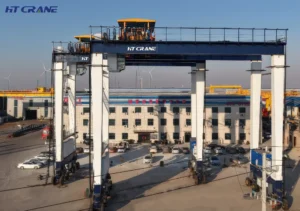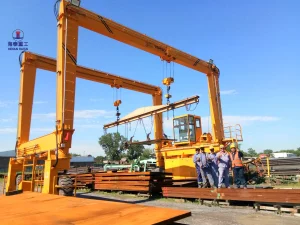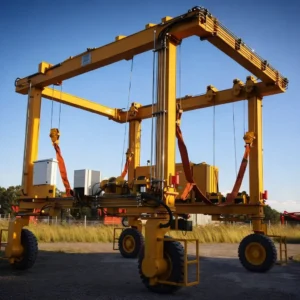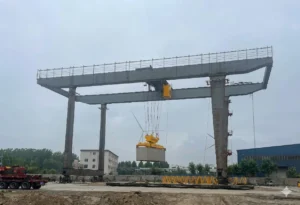
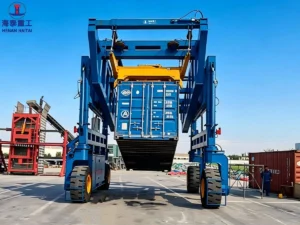
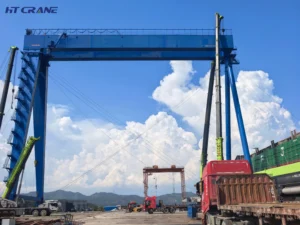
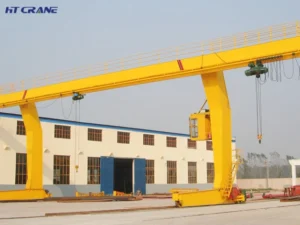
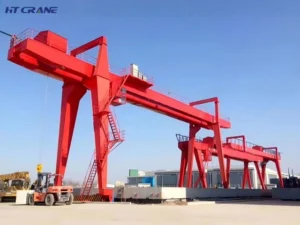
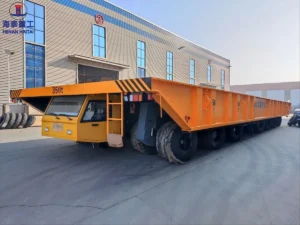
Upgrading or expanding shipyard haul-out capacity requires a clear evaluation of capital expenditure against long-term operational returns. This article breaks down the financial and operational mechanics behind calculating boat hoist ROI for commercial marinas, boatyards, and naval repair facilities. By analyzing throughput velocity, labor efficiency gains, dry-dock space optimization, and risk-mitigation savings, shipyard operators can evaluate how investing in a high-performance marine travel lift drives sustainable profitability and shortens the capital payback window.
This boat hoist ROI guide will help you calculate the return on your HaiTai Marine Travel Lift — faster operations, less downtime, higher revenue.
ROI of Investing in a Professional Marine Boat Hoist
Commercial boatyards, repair facilities, and busy marina operators face constant pressure to maximize haul-out throughput while controlling operating costs. In an industry where vessel storage fees and repair turnarounds drive the bottom line, lifting equipment isn’t just an operational utility—it’s the primary revenue engine. Investing in a professional mobile marine travel lift represents a substantial capital expenditure, making a clear evaluation of return on investment essential for shipyard owners and financial managers. Evaluating this capital allocation requires looking beyond the initial purchase price to analyze long-term operational velocity, labor reduction, dry-dock density, and service diversification.
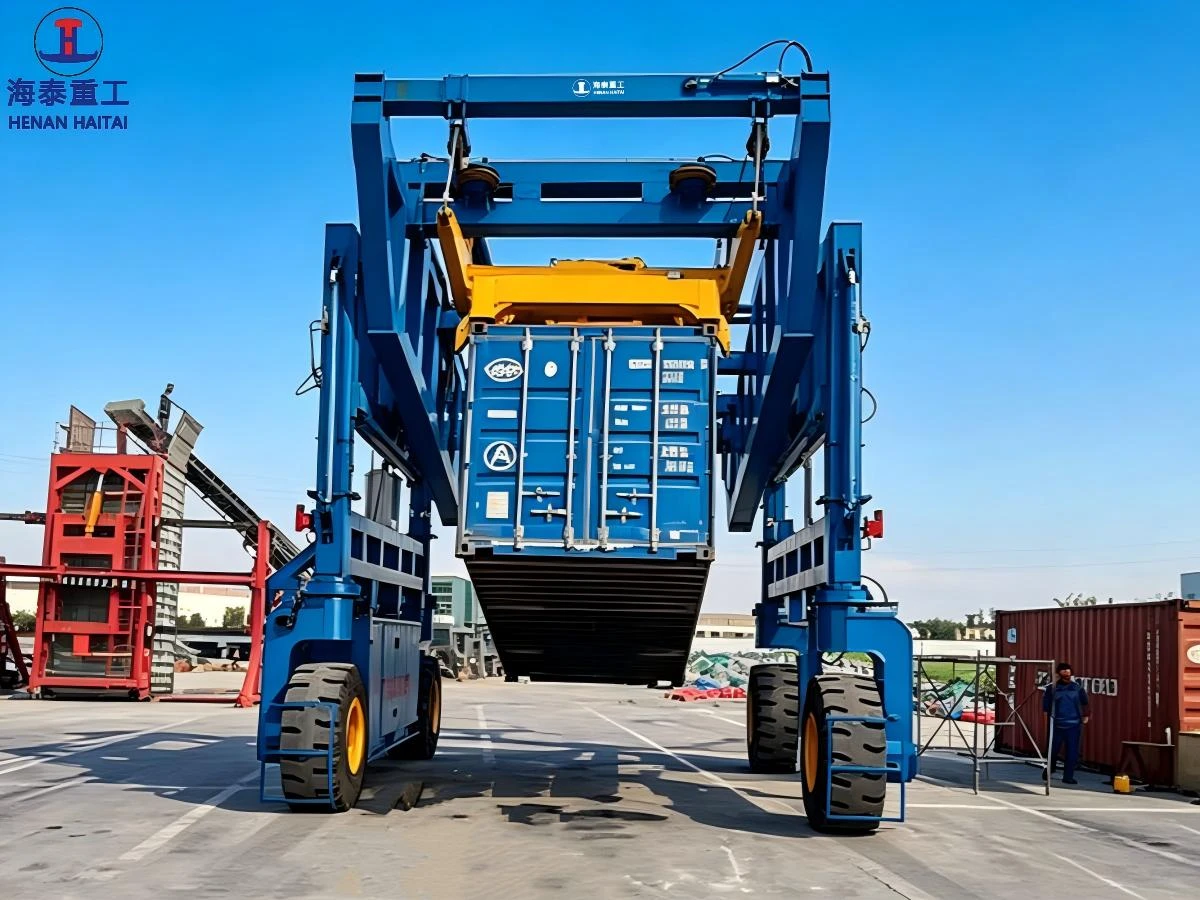
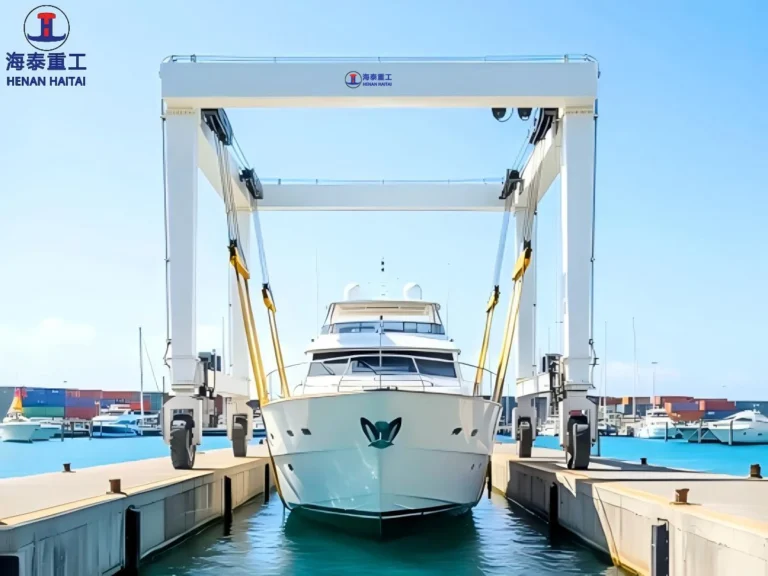
Calculating boat hoist ROI involves analyzing both direct revenue expansion and indirect cost reductions. A modern haul-out unit enables yards to handle larger vessel tonnages, accelerate daily launch and recovery cycles, and minimize scheduled maintenance downtime. By understanding how modern hydraulic lifting systems, remote control steering, and variable-span designs directly impact daily operations, marine executives can turn major capital investments into predictable, long-term profit centers.
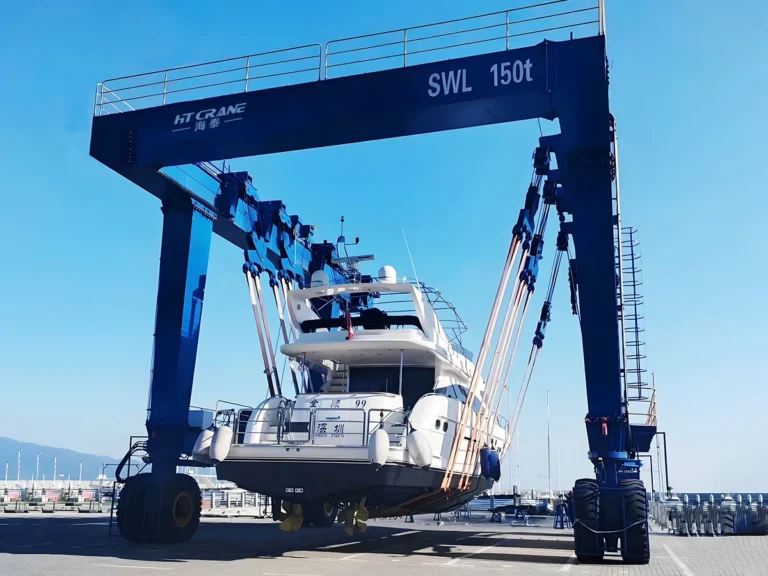
Revenue Acceleration: Expanding Capacity and Throughput
The most direct contributor to a short payback period is an increase in daily haul-out volume. Traditional fixed marine railways, dry docks, or outdated lifting rigs often create severe operational bottlenecks, limiting the number of vessels a facility can haul, service, and launch each week.
1. Increased Daily Haul-Out Capacity
Modern mobile hoists feature precise hydraulic winch controls and multi-wheel steering modes (including 90-degree lateral and carousel steering) that drastically cut placement time. Reducing time-in-slings from two hours down to 45 minutes allows a busy yard to expand daily haul-out capacity without adding extra shifts.
2. Capturing Higher-Margin Weight Classes
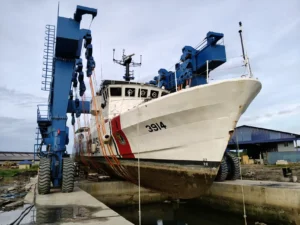
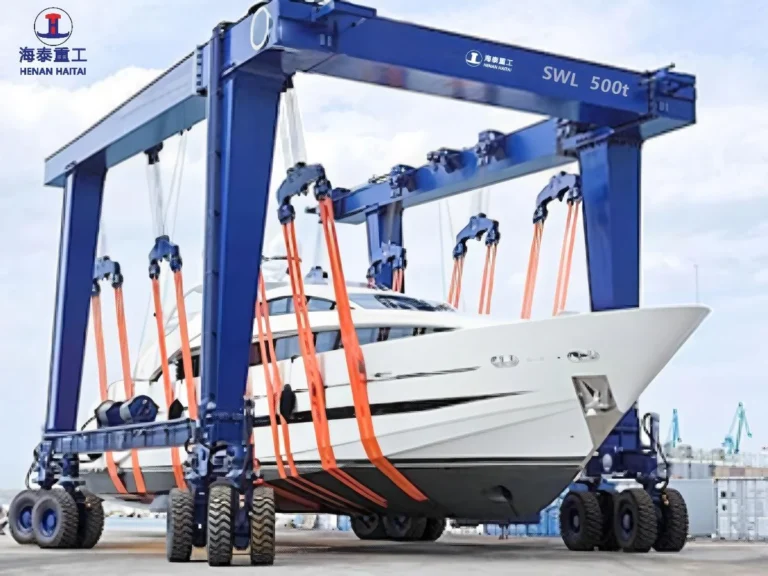
Upgrading from a lower-capacity rig (e.g., 50 tons) to a heavy-duty unit (such as 300 to 800+ tons) opens immediate access to commercial fishing fleets, tugboats, superyachts, and government vessels. Higher tonnage classes command significantly higher haul-out rates and longer-term, higher-margin repair contracts.
3. Maximizing Dry-Storage Yard Density
Precision steering and independent winch controls allow operators to park vessels significantly closer together in the staging yard. By tightening vessel spacing, marinas can fit 15% to 25% more boats into the same square footage, directly boosting seasonal land-storage revenues.
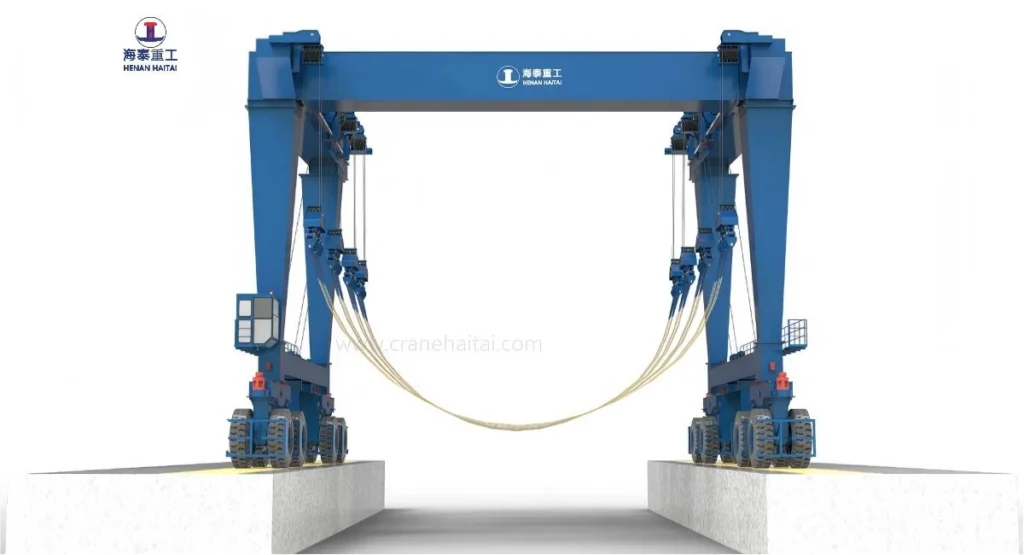
Cost Reduction Metrics: Labor, Maintenance, and Downtime
Evaluating the financial viability of a marine travel lift investment return requires looking at both sides of the balance sheet. While revenue expansion drives the top line, operational cost savings secure and multiply net margins.
Labor Efficiency and Crew Overhead
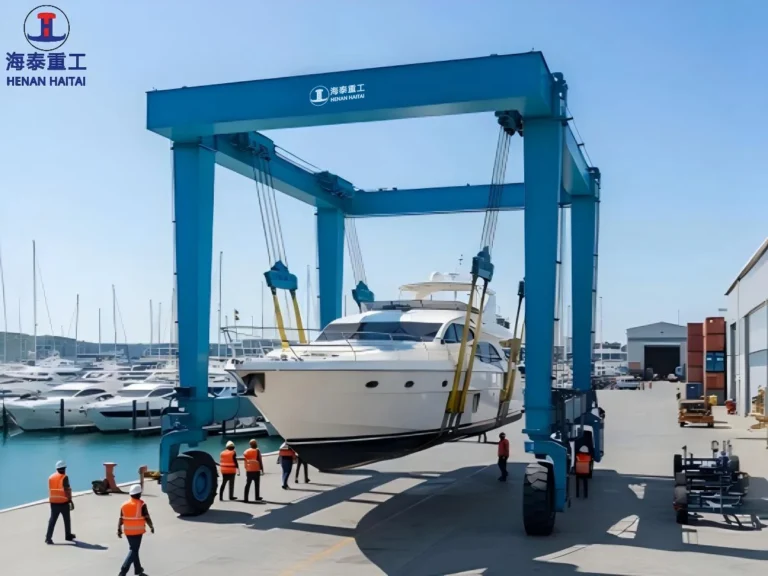
Older lifting systems often require large ground crews to manage blocks, guy wires, and rigid rail alignments. Modern wireless remote-controlled hoists allow a single operator, supported by one or two spotters, to safely execute complex launch and recovery operations. This slashes labor hours per haul, allowing yard personnel to be reassigned to high-value maintenance and structural repair work.
Structural Reliability and Reduced Downtime
Unscheduled machinery failure during peak haul-out season can cost shipyards tens of thousands of dollars per day in lost service fees and delayed contracts. Equipment built with marine-grade paint coatings, stainless steel hydraulic tubing, and structural articulation joints withstands harsh saltwater environments. This durability keeps annual maintenance costs low and prevents catastrophic downtime during peak operational periods.
Risk Mitigation and Insurance Overhead
Hull damage during lifting creates immediate financial loss, legal friction, and rising insurance premiums. Modern equalizer sling systems balance boat weight evenly across multiple lifting points, preventing localized hull crushing or composite cracking. Demonstrating advanced, damage-free lifting equipment to marine underwriters often helps facilities secure lower liability insurance rates.
Financial Payback Modeling: A Practical Yard Scenario
To illustrate how a facility measures its yacht crane cost benefit, consider a mid-sized marine service center upgrading its lifting infrastructure.
| Parâmetro | Legacy Equipment Setup | Upgraded Professional Hoist | Operational Variance |
| Max Vessel Capacity | 80 Tons | 250 Tons | +170 Tons Capacity Range |
| Average Haul-Outs per Day | 3 Vessels | 6 Vessels | +100% Throughput Volume |
| Average Haul-Out Fee | $600 / Haul | $1,200 / Haul (Larger Vessels) | +$600 Average Fee Increase |
| Daily Direct Haul Revenue | $1,800 | $7,200 | +$5,400 Daily Gross Gain |
| Operational Days per Year | 220 Days | 220 Days | Standard Operating Calendar |
| Gross Annual Haul Revenue | $396,000 | $1,584,000 | +$1,188,000 Annual Gain |
Beyond direct haul-out fees, larger vessels generate additional downstream revenue through pressure washing, hull painting, shaft re-alignment, engine overhauls, and yard storage rental. In this representative scenario, even after accounting for initial equipment purchase, operator training, and routine preventative maintenance, the capital expenditure pays for itself well within the first 18 to 24 months of continuous operation.
Boat Hoist ROI: Key Technical Requirements for Capital Longevity
Achieving a long operating lifespan requires choosing equipment configured specifically for your facility’s environmental and operational demands.
Corrosion Protection Packages
Saltwater spray quickly degrades standard industrial paint systems. To ensure long asset life, specified equipment should include multi-layer marine epoxy primers, polyurethane topcoats, and hot-dip galvanized structural components in critical areas.
Articulated Structure Design
Fixed, rigid gantry frames can suffer intense weld fatigue when travelling over uneven concrete or sloping pier ramps. An articulated main hinge joint allows the gantry frame to flex slightly under heavy loads, preserving structural integrity and protecting wheel bearings across uneven terrain.
Variable Sling Adjustment Hydraulics
Vessels vary widely in weight distribution, hull length, and superstructure layout. Hydraulic sling positioners allow operators to adjust lifting point spacing directly from the remote transmitter while the vessel is in the slip, ensuring level, stress-free lifts for everything from deep-draft sailboats to wide-beam catamarans.
Procurement Protocols for Maximum Return of Boat Hoist ROI
To protect your capital investment, project procurement teams should establish clear technical and operational specifications during vendor evaluation:
- Conduct Precise Slipway Audits: Measure existing pier width, water depth at low tide, and concrete bearing capacity to confirm compatibility before finalizing gantry dimensions.
- Require Certified Load Testing: Ensure the manufacturer conducts factory operational load tests (typically 125% rated dynamic capacity) prior to shipment and commissioning.
- Establish Local Spare Parts Inventories: Partner with suppliers that maintain ready stocks of critical hydraulic hoses, winch cables, remote controls, and sling assemblies to guarantee quick delivery if replacements are needed.
- Invest in Operator Certification: Require factory-led training for yard staff during commissioning to ensure safe operating techniques, load balancing mastery, and routine daily inspection routines.

FAQs —— Guide to Get High Boat Hoist ROI
Q1: How long does it typically take to achieve full boat hoist ROI?
For commercial shipyards and busy marine facilities operating near capacity, investment payback is typically achieved within 12 to 36 months. Payback velocity depends on daily haul volume, regional storage rates, local competition, and the facility’s ability to offer high-margin repair services on hauled vessels.
Q2: What maintenance routines are required to keep a marine travel lift running reliably?
Daily checks should focus on inspecting wire ropes, slings, hydraulic hose connections, and fluid levels. Monthly schedules require greasing wheel bearings, checking drive-gear clearances, inspecting structural bolts, and verifying engine filtration systems to prevent unscheduled downtime.
Q3: Can a mobile hoist operate on unpaved or uneven ground?
Standard models perform best on reinforced concrete runways engineered to handle high concentrated wheel loads. However, heavy-duty units equipped with large industrial rubber tires and articulated structural frames can operate on compacted gravel or stabilized earth yards when designed for those ground pressures.
Q4: What is the typical operational lifespan of a professional boat hoist?
When built with marine-grade corrosion protection and maintained according to factory specifications, a high-quality travel lift delivers an operational service life of 20 to 30+ years. Periodic wire rope and sling replacements, engine servicing, and hydraulic component overhauls preserve performance over decades of continuous use.
Q5: Should my yard invest in a custom frame height or width?
Customizing clear height and internal width is highly beneficial if your yard handles specialized hull forms, such as high-superstructure catamarans, deep-keel sailboats, or wide commercial barges. Selecting dimensions tailored to your local vessel mix ensures you can capture maximum market share without operational limitations.