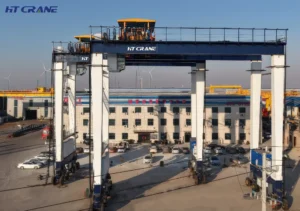
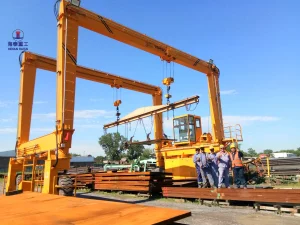
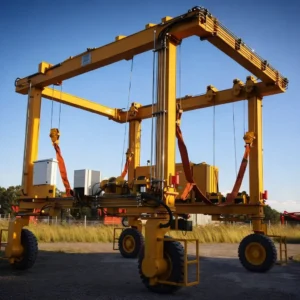
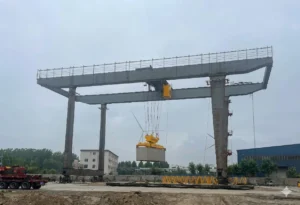
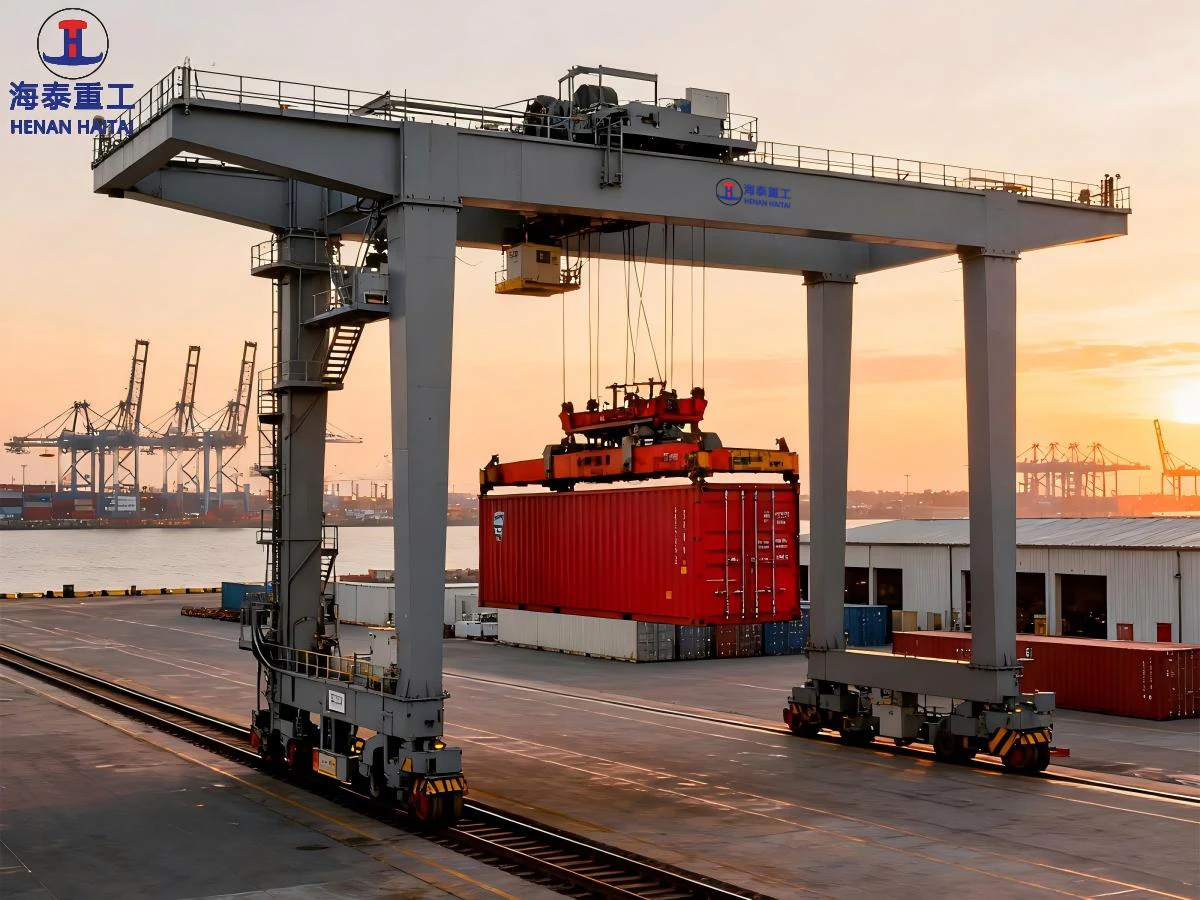
Haitai RTG cranes deliver exceptional mobility and stacking efficiency in railway container yards, making them a smart choice for intermodal terminals handling rail-to-road transfers. Unlike fixed rail-mounted systems, rubber tyred gantry cranes move freely across yards, adapting to changing layouts without costly infrastructure.
Procurement managers and terminal operators evaluating equipment for railway container yards need solutions that balance flexibility, throughput, and long-term costs. Haitai RTG cranes from Crane HaiTai address these needs with customizable capacities (35–70 tons), reliable drive options, and proven performance in intermodal environments.
This guide explains the key advantages, technical considerations, and decision factors for purchasing Haitai RTG cranes specifically for railway container yards. You will gain a clear framework to evaluate options and move forward confidently.
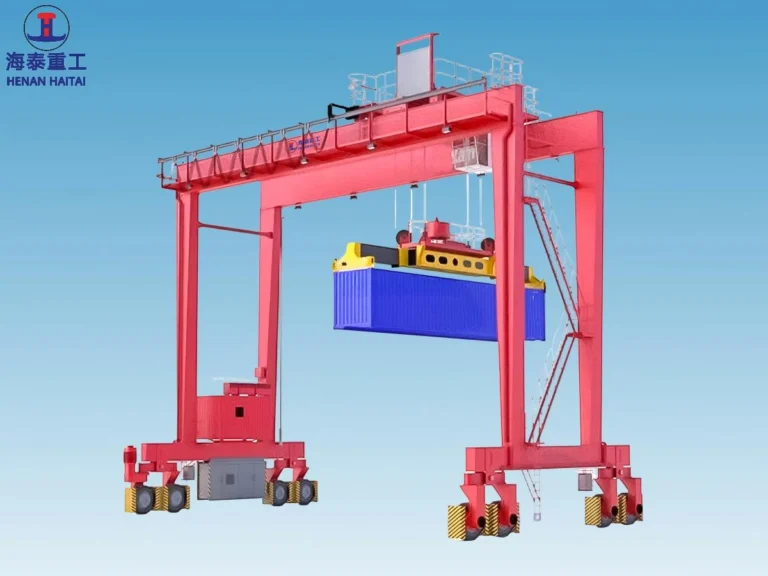
Haitai RTG Cranes for Railway Container Yards
- Capacidade de elevação: 35–70 tons (under spreader)
- Span: 23.47–26 m (ideal for rail tracks + truck lanes)
- Stacking: 1 over 5 to 1 over 6 high
- Drive Options: Electric, diesel-electric, hydraulic Market reference pricing typically ranges in the mid-to-high tier for premium configurations — contact us for tailored quotes.

What Idealize RTG Cranes for Railway Container Yards?
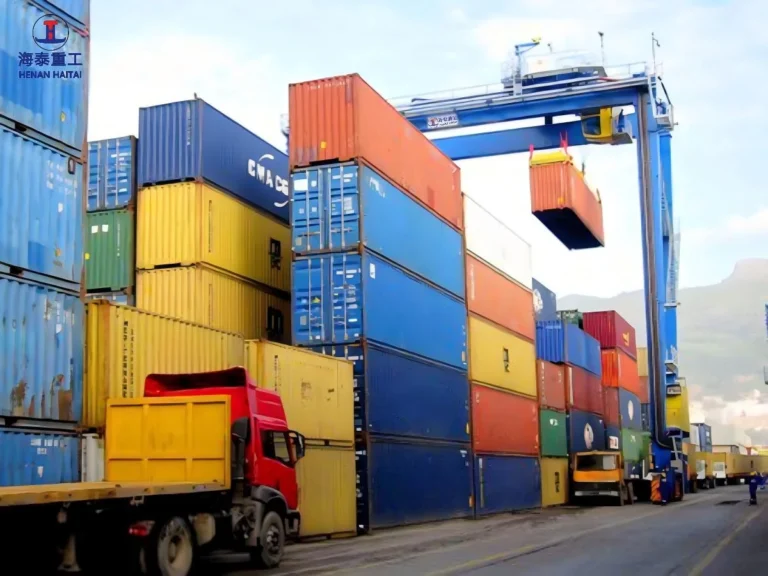
Haitai RTG cranes provide unmatched flexibility for intermodal railway yards where layouts evolve and multi-modal transfers are constant. They operate without fixed rails, allowing quick repositioning between rail sidings, storage blocks, and truck loading zones.
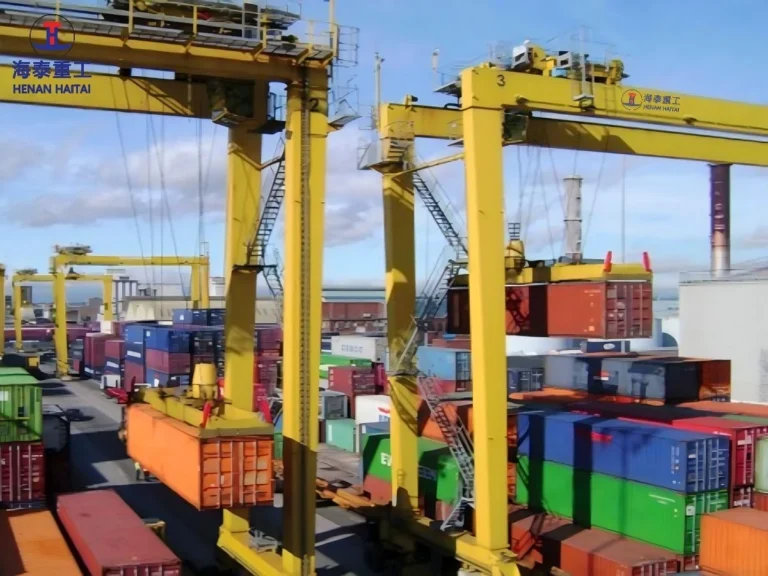
In railway container yards, operations involve frequent rail car unloading, temporary stacking, and truck handoffs. RTG mobility reduces rehandles and improves yard utilization compared to RMG cranes that require extensive rail infrastructure.
Why this matters for decision-makers: Lower civil works costs and faster deployment make RTGs the practical choice for expanding or upgrading intermodal facilities. Haitai models integrate well with existing rail operations, supporting 20′, 40′, and 45′ ISO containers with telescopic spreaders.
Bloco de Definição: A Rubber Tyred Gantry (RTG) crane is a mobile lifting system using rubber tires for yard travel, classified under standards such as ISO 4301 and FEM 1.001 for container handling.
Key Advantages of Haitai RTG Cranes in Intermodal Rail Operations
Haitai RTG cranes for railway container yards excel in railway yards through superior maneuverability, efficient stacking, and adaptable power systems. These features directly address common intermodal challenges like variable throughput and space constraints.
High Mobility and Yard Adaptability
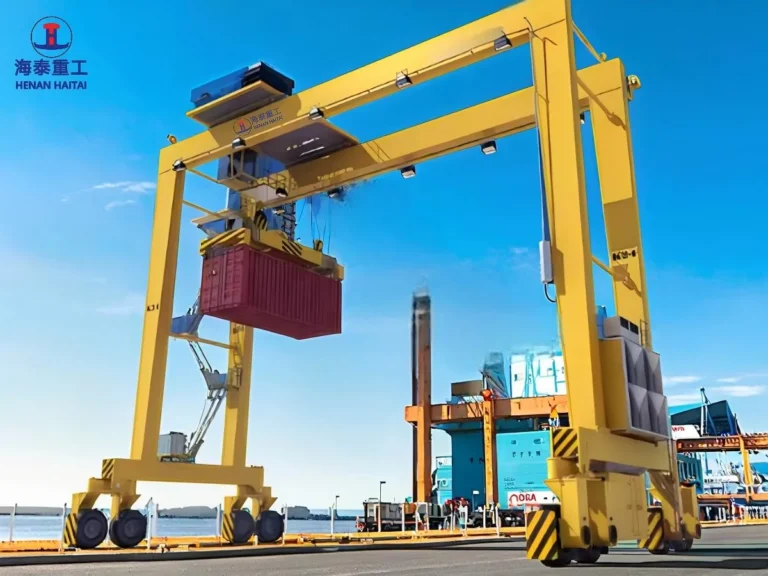
Haitai RTG cranes for railway container yards can move freely on rubber tires, enabling 360° steering (especially in hydraulic models) and operation on varied ground conditions. This is critical in railway yards where rail tracks limit fixed equipment placement.
Supporting data: Typical gantry travel speeds reach 130 m/min (no load), with precise trolley speeds of 70 m/min. Haitai designs handle stack heights up to 1 over 6, maximizing vertical space near rail sidings.
Why it pays off: Faster container repositioning reduces truck and rail car idle time, improving overall terminal velocity.
Efficient Stacking and Throughput
Haitai RTGs support high cycle rates suitable for rail transfers, with hoisting speeds of 18–24 m/min full load. Advanced VFD controls ensure smooth operation, minimizing container sway and damage.
In intermodal settings, this translates to quicker rail car unloading and better synchronization with road transport.
Drive System Flexibility: Electric, Hydraulic, and Hybrid Options
Haitai offers electric (low emissions, grid-powered), diesel-electric (independent operation), and hydraulic configurations for different yard power availability.
Comparison Table: Drive Systems for Railway Yard RTGs
| Features of Haitai RTG Cranes | Electric RTG Crane | Diesel-Electric RTG Crane | Hydraulic RTG Cranes |
|---|---|---|---|
| Emissions | Near-zero | Médio | Low-Medium |
| Custo operacional | Lowest (long-term) | Médio | Médio |
| Mobility/Flexibility | Good (cable reel) | Mais alto | Highest (360° slew) |
| Manutenção | Baixo | Médio | Médio |
| Best for Railway Yards | Grid-available sites | Remote or variable power | Complex/narrow layouts |
Conclusion from comparison: For most railway container yards, electric or diesel-electric Haitai RTGs offer the best balance of cost and performance. Hybrid-like options reduce fuel use by 30–50% versus pure diesel.
Procurement takeaway: Evaluate your yard’s power infrastructure early — Haitai engineers can recommend the optimal drive type.
Technical Specifications and Customization for Railway Applications
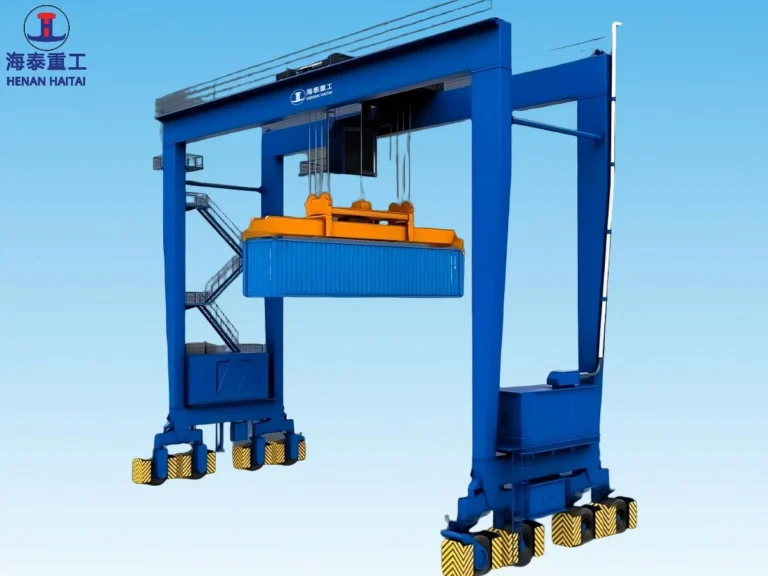
Haitai RTG cranes come with parameters optimized for intermodal railway yards. Standard models feature 35–70 ton capacities, spans covering multiple rail tracks plus truck lanes, and stacking up to 6 high.
Typical Reference Parameters (industry-typical ranges; confirm with factory for exact model):
- Lifting height: 15.8–18.5 m
- Hoisting speed: 12–24 m/min full load
- Travel speeds: Up to 130 m/min gantry
- Duty class: A5–A6 / M4–M6 suitable for frequent cycles
- Safety features: Overload protection, anti-collision, wind alarms, emergency stops
Customization options include spreader rotation (±5°), automation readiness (DGPS, TOS integration), and climate adaptations. This ensures perfect fit for your specific rail yard layout and throughput targets.
Why these specs matter: They support the high-frequency moves required in rail operations while maintaining safety and reliability under FEM/ISO standards.
Why Choose Haitai RTG Cranes: Procurement Decision Guide
Haitai RTG cranes stand out for railway container yards due to proven manufacturing quality, customization expertise, and comprehensive support. As a direct manufacturer, Crane HaiTai ensures traceability, factory testing, and certifications (CE, ISO, classification societies).
Key purchase reasons:
- Reliability in intermodal use: Designed for mixed rail-road operations with flexible mobility.
- Future-proof features: Automation-ready and energy-efficient options.
- Full lifecycle support: Installation, training, spare parts, and maintenance programs.
- Global export experience: Successful deployments in various port and inland terminals.
Common procurement pitfall to avoid: Focusing only on upfront price instead of total cost of ownership and yard-specific fit. Haitai’s engineering consultation helps avoid this.
For terminals expanding rail container handling, Haitai RTGs provide a flexible, high-performance solution that grows with your operations.
Conclusion: Why Choose Haitai’s RTG cranes?
Henan Haitai Heavy Industry Co., Ltd. (Guindaste HT) is an experienced and professional container yard crane manufacturer in China. RTG cranes are an excellent investment for railway container yards because they combine flexible rubber-tired mobility, efficient high-stacking performance, and adaptable power systems that lower long-term costs while boosting throughput. Their design perfectly suits the dynamic needs of intermodal operations where rail, road, and storage intersect.
When planning your next yard upgrade or new facility, prioritize equipment that delivers both immediate productivity gains and future scalability. Haitai RTG cranes from Crane HaiTai meet these criteria with engineering excellence and dedicated support.
Next steps:
- Share your yard layout and throughput requirements for a customized proposal.
- Request a technical consultation or site visit simulation.
- Contact us today for pricing and delivery details on Haitai RTG cranes.
Ready to enhance your railway container operations? Reach out via WhatsApp, email, or the quote form for expert guidance and competitive options.
Isenção de responsabilidade: A seleção final do equipamento deve ser confirmada por um engenheiro certificado e estar em conformidade com as normas locais para equipamentos de elevação.

Perguntas frequentess about RTG Cranes for Railway Container Yards
Q1: Why are RTG cranes preferred over RMG in railway container yards?
RTG cranes offer greater layout flexibility and lower infrastructure costs since they require no fixed rails. This makes them ideal for evolving intermodal yards. RMG suits ultra-high-density fixed operations, but RTGs better handle mixed rail-truck flows common in railway terminals.
Q2: What drive system is best for Haitai RTG cranes in rail yards?
Electric or diesel-electric options generally provide the best balance for most railway yards. Electric reduces emissions and costs where grid power is available; diesel-electric ensures independence. Haitai’s hydraulic variants excel in tight or variable terrain.
Q3: How do Haitai RTG cranes improve efficiency in intermodal operations?
They enable faster stacking/retrieval, reduced rehandles, and better space utilization through high mobility and precise controls. This shortens rail car dwell times and improves synchronization with trucks.
Q4: What capacities and features should I specify for RTG cranes for railway container yards?
You need to focus on 35–70 ton capacity, adequate span for rail + truck lanes, and 1-over-5/6 stacking RTG cranes for railway container yards. Prioritize VFD controls, safety systems, and automation readiness. Haitai engineers can tailor all these specifications to your exact needs.
Q5: What advantages do your RTG Cranes have over other brands in port energy consumption?
Our electric RTG cranes for port terminals cut power consumption by nearly 25%. Because we apply energy feedback technology to recycle lifting falling power. Our diesel RTG cranes reduce fuel consumption and operating costs for long-term yard use. Because we use low-emission engines with optimized hydraulic circuits.